
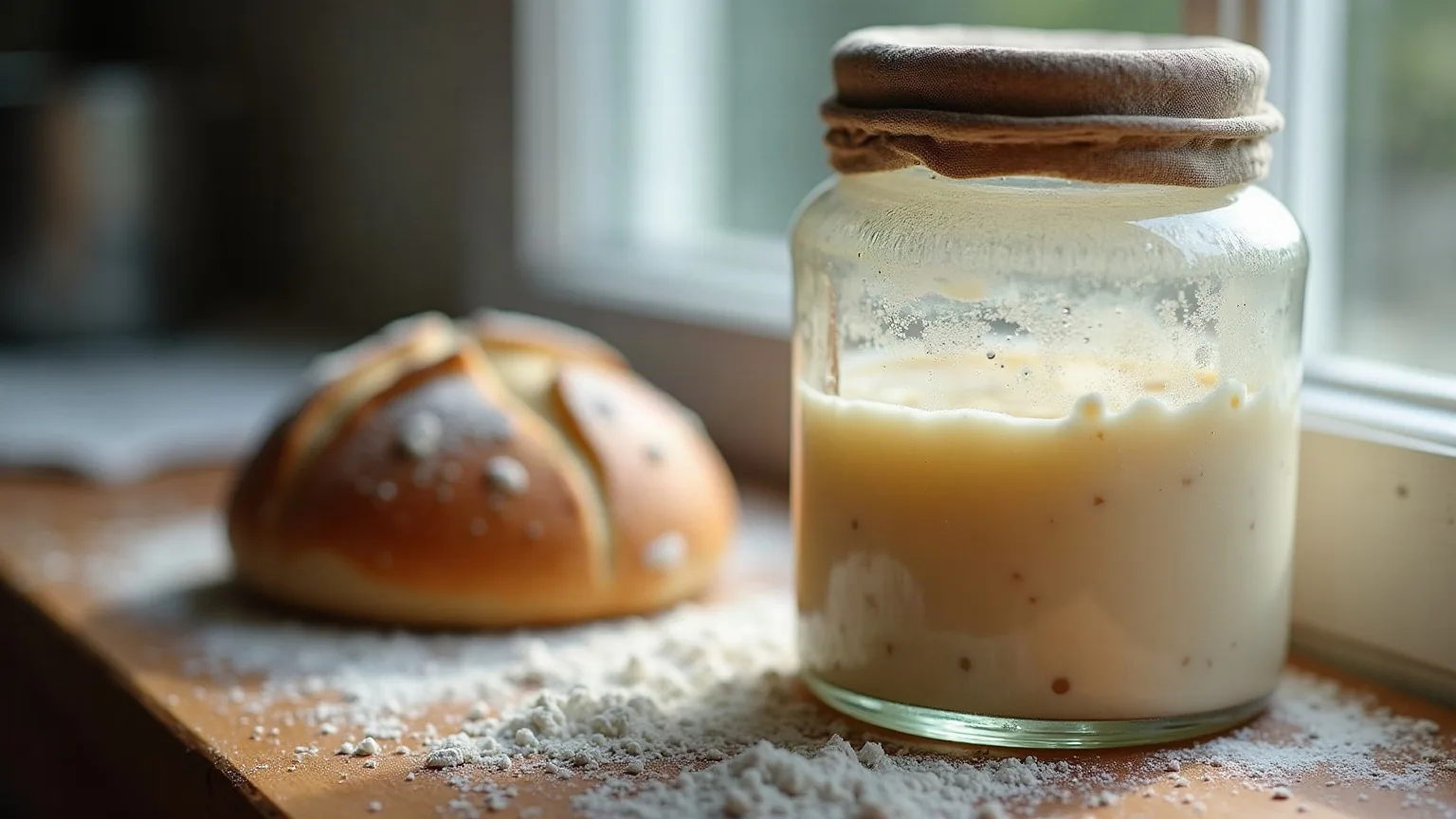
Sourdough starter
The beliefA sourdough starter is treated as something mythical — inherited from someone, aged for years, demanding a special flour.
The truthFlour and water. Nothing else. Five days and you have your own; being “decades old” shapes the habit, not the taste.
How to make it
What you need
- 50 g wholemeal or rye flour, to start
- White flour for the daily feeds
- Unchlorinated water at 25–28 °C
How the engine read this list (3 lines)
| 50 g | Wholemeal or rye flour | flour |
| — | White flour | flour |
| — | Unchlorinated water | water |
An empty weight means that line could not be turned into grams — either the amount is open ("to taste") or the ingredient has no record here. Neither enters the sum as zero; they do not enter it at all.
Day one: mix 50 g of wholemeal flour with 50 g of water, put it in a jar and cover it with cloth rather than a lid. Leave it at 24–28 °C.
Days two and three: you may see a rise and a sharp smell, then nothing at all. Both are normal. Once a day keep 50 g of the starter, discard the rest, and feed it 50 g of flour and 50 g of water.
Days four and five: the smell turns towards sour yoghurt or cider vinegar and the bubbles become regular and evenly spread. Keep feeding at the same hour.
Days five to seven: if it doubles within four to eight hours of a feed, it is ready. To be sure, drop a teaspoon of it into a glass of water — floating means it holds enough gas.
Once ready, move it to the fridge and feed it weekly. Before a baking day, wake it with two feeds at room temperature.
The others that work the same way
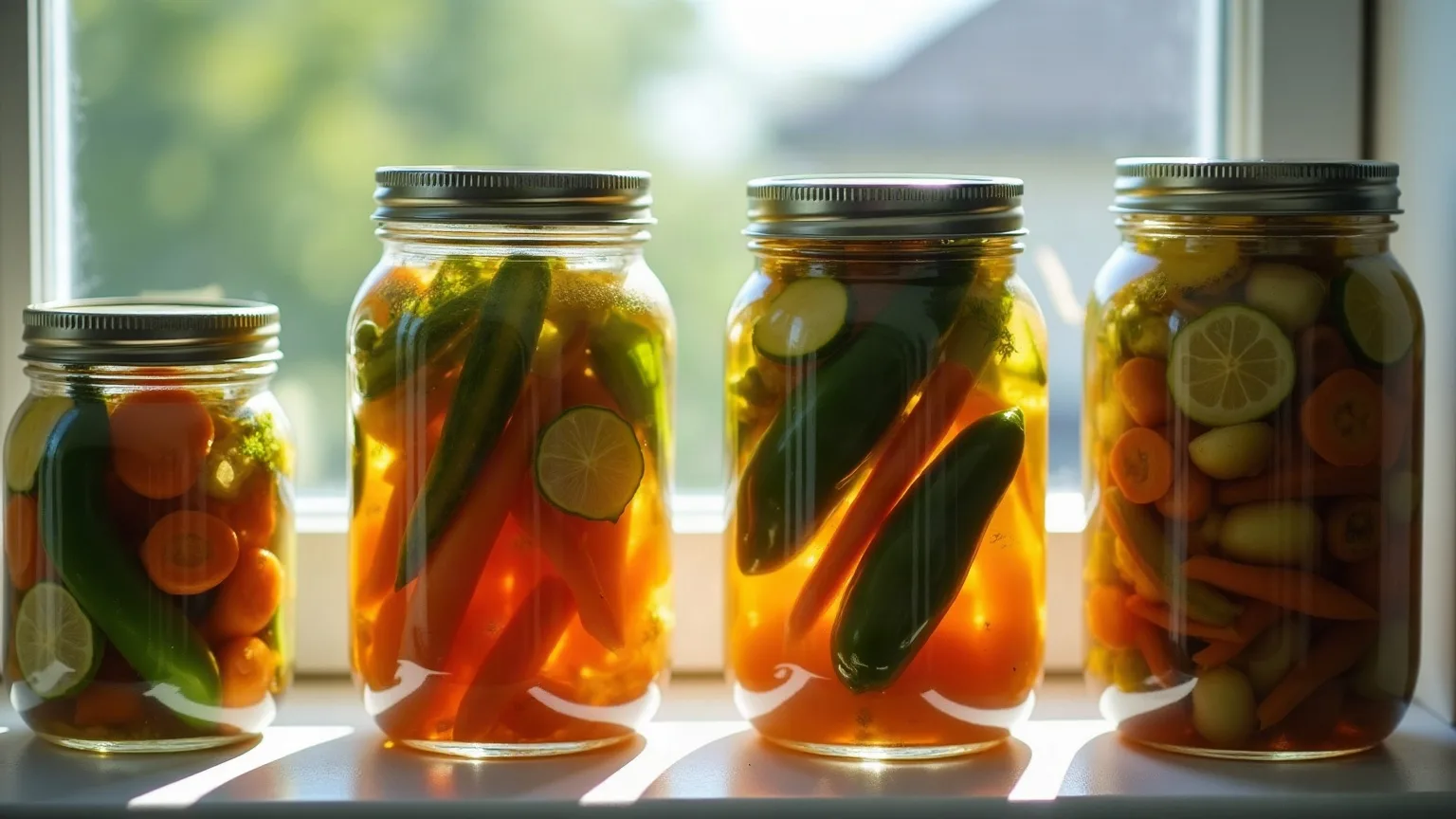
Pickles
The truthHit the right salt ratio and the jar protects itself. The whole craft is one number.

Apple cider vinegar
The truthApples, water, a little sugar and time. You cover the jar with a cloth and wait.

Tarhana
The truthYoghurt, flour and vegetables. A week of fermenting, then dried and ground. A single bowl is enough.