
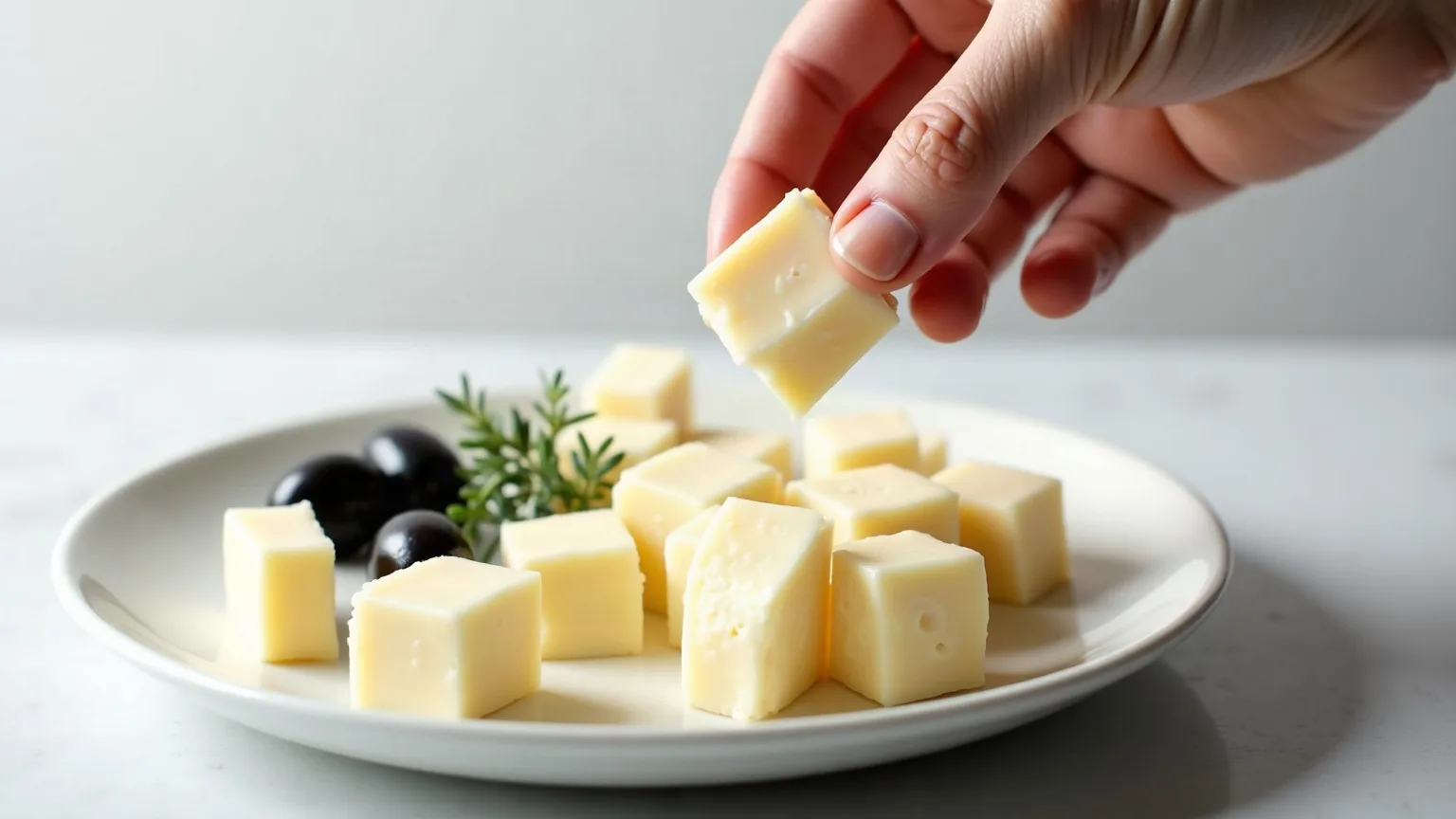
White cheese
The beliefCheesemaking is assumed to belong to a dairy, with only something curd-like achievable at home.
The truthMilk, rennet and salt. Here an enzyme cuts the curd rather than acid — and that is the whole difference.
How to make it
What you need
- 4 litres of full-fat pasteurised milk, not UHT
- Rennet, at the dose on the bottle
- Salt: 120 g per litre of water for the brine
- Muslin and a sieve
How the engine read this list (4 lines)
| 4120 g | Full-fat pasteurised milk | milk |
| — | Rennet | no record |
| 120 g | Salt for the brine | salt |
| 1000 g | Water for the brine | water |
An empty weight means that line could not be turned into grams — either the amount is open ("to taste") or the ingredient has no record here. Neither enters the sum as zero; they do not enter it at all.
Warm the milk to 32–35 °C. Without a thermometer, dip your little finger: warm but not hot is the window.
Dilute the rennet in a little water, stir it through for thirty seconds and then bring the milk completely to rest. Do not touch it again: milk in motion cannot gel.
Wait 45 to 60 minutes. Dip a finger and lift: a clean break in the curd means it is ready, while a cloudy, soft one needs longer.
Cut the curd into two-centimetre cubes with a knife and leave it fifteen minutes: the whey runs out of the cuts.
Ladle it into a muslin-lined sieve, press it under a weight overnight, then turn it out, cut it into blocks and put it in the brine. Give it at least a week to ripen.
The others that work the same way
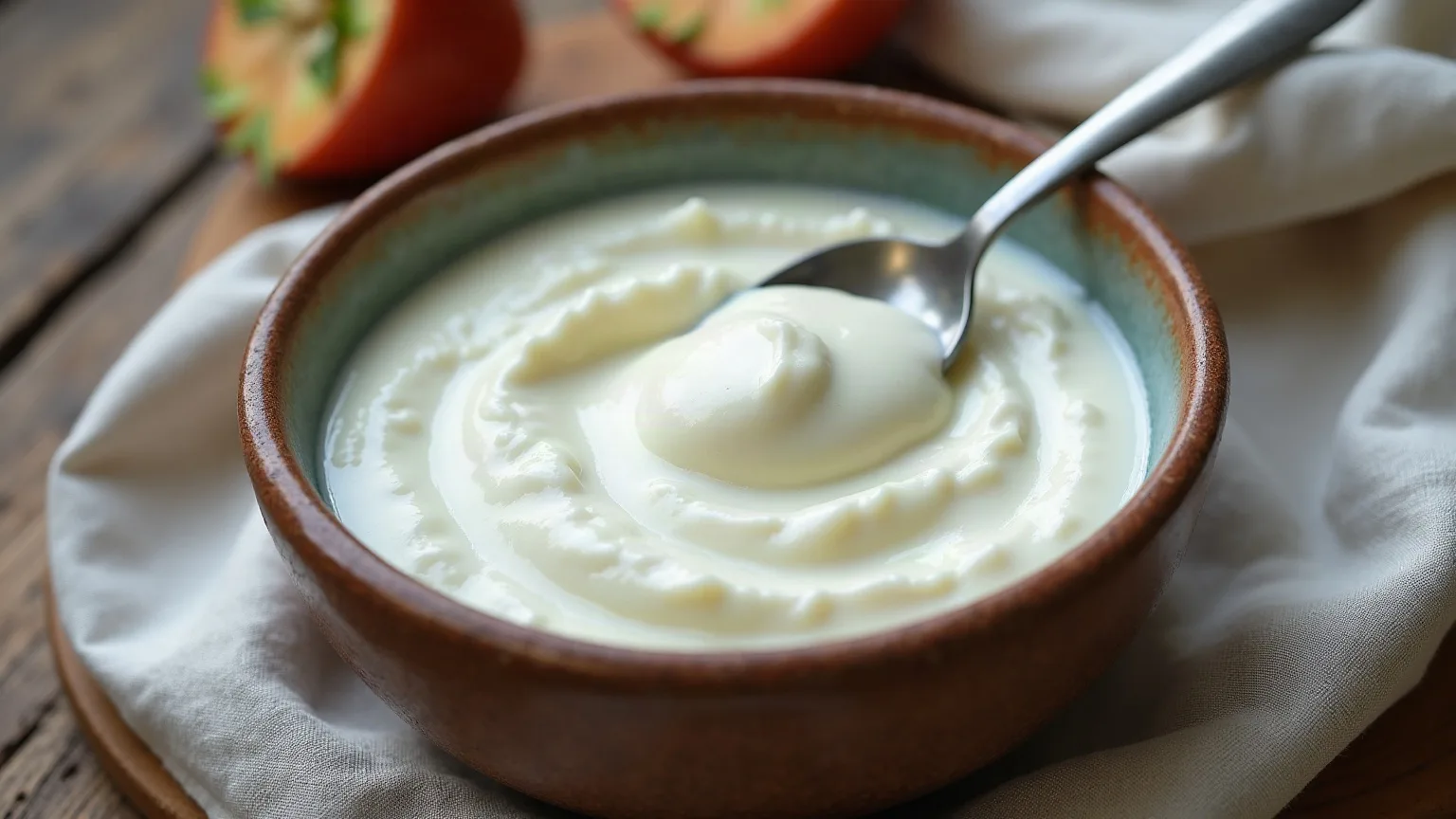
Yoghurt
The truthBesides milk you need one spoon of yoghurt. The rest is holding a temperature and waiting.
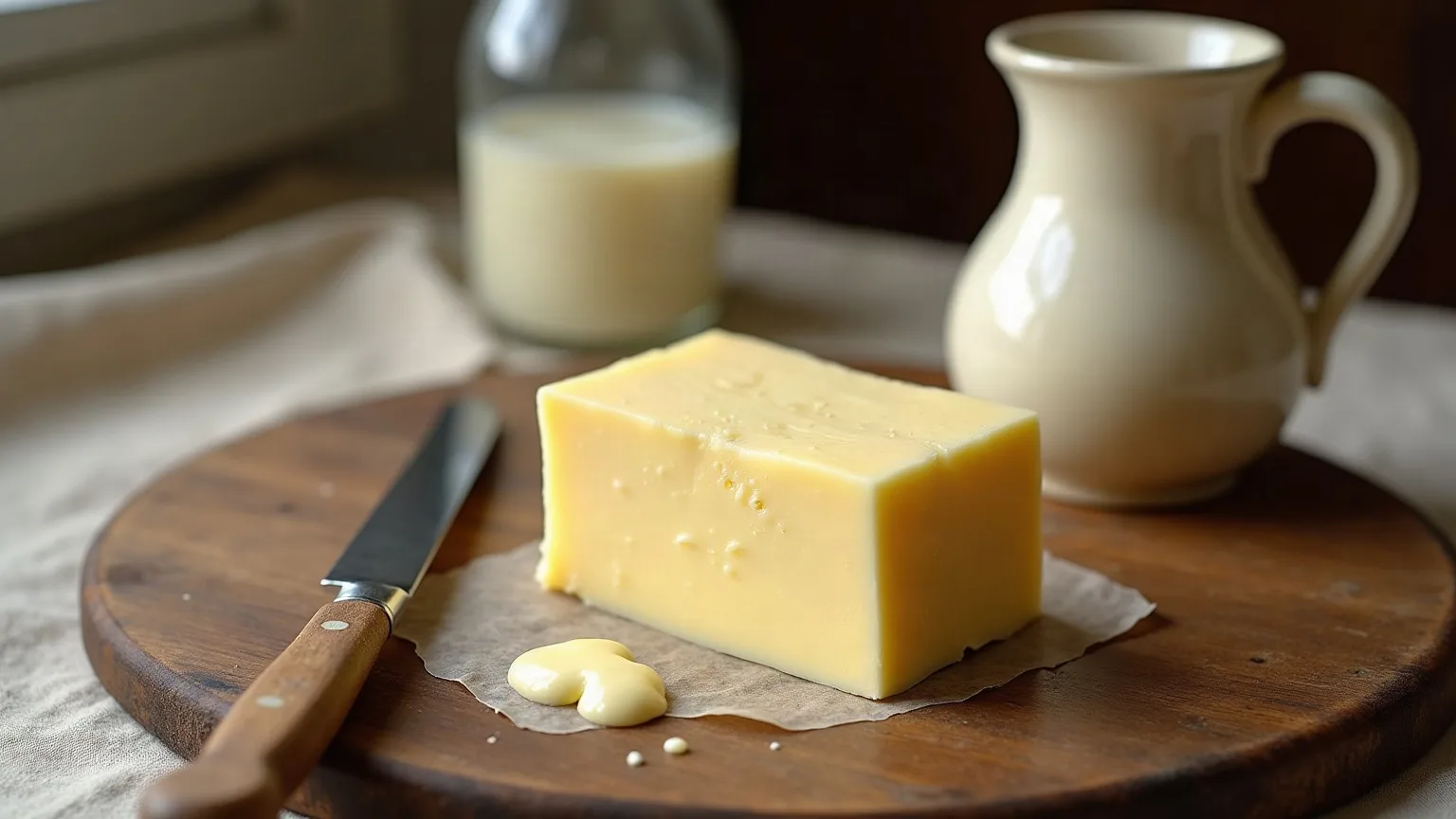
Butter
The truthIt is whipped cream taken too far. Around the fifteenth minute it separates on its own and you have both butter and buttermilk.
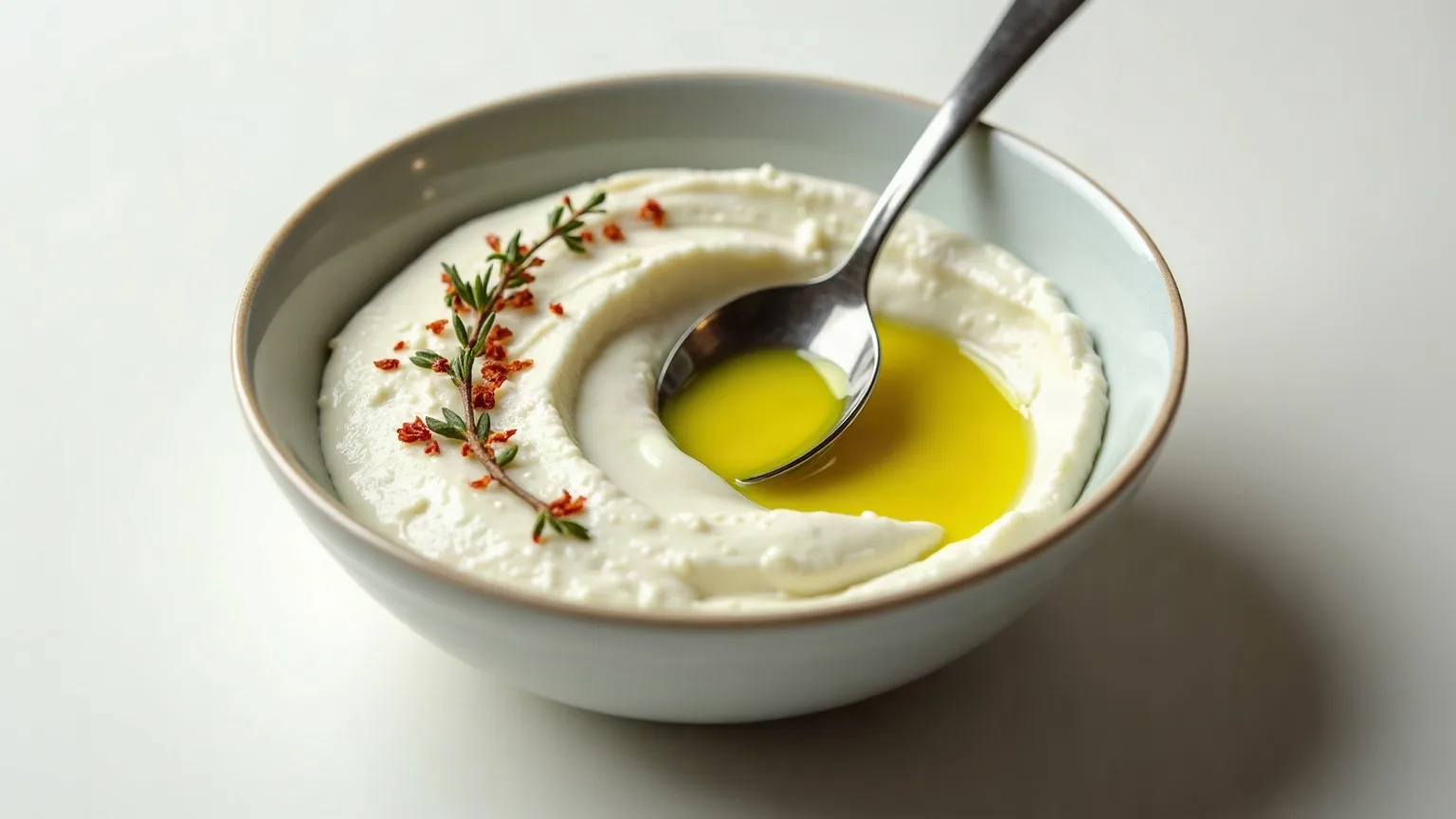
Labneh
The truthIt is strained yoghurt, and the only variable is time: six hours gives a thick yoghurt, twenty-four a cheese.