
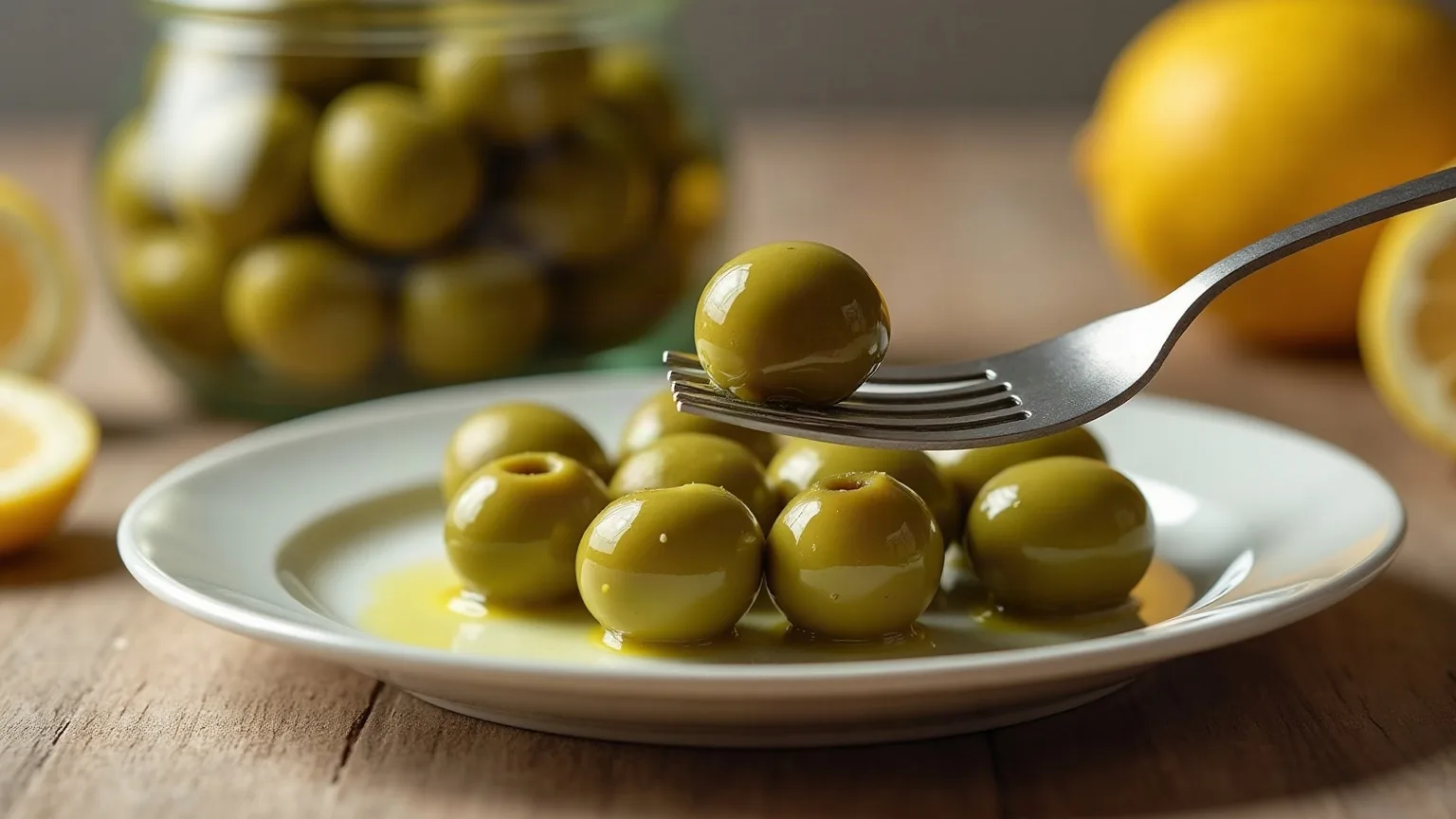
Cured green olives
The beliefPeople assume an olive can be eaten off the tree, and that its bitterness is a matter of variety.
The truthNo olive is edible raw. Its bitterness is one molecule, and water or salt draws it out over months.
How to make it
What you need
- 3 kg green olives
- For the brine: 100 g rock salt per litre of water
- Lemon, bay leaves and garlic
- Glass jars and a weight
How the engine read this list (6 lines)
| 3000 g | Green olives | green-olive |
| 100 g | Rock salt | salt |
| 1000 g | Water for the brine | water |
| — | Lemon | lemon |
| — | Bay leaves | bay-leaf |
| — | Garlic | garlic |
An empty weight means that line could not be turned into grams — either the amount is open ("to taste") or the ingredient has no record here. Neither enters the sum as zero; they do not enter it at all.
Sort the olives, discarding bruised ones. Crack each lightly with a wooden mallet or score it two or three times: without an opened surface the bitterness will not leave for months.
Put them in a wide container, cover with fresh water and change it daily for ten days. The water yellows less each day, and that is how you watch the bitterness leave.
Make the brine at 100 g of salt per litre. To check the strength, float a raw egg in it: a coin-sized patch showing above the surface means the ratio is right.
Pack the olives into jars with slices of lemon, bay and garlic between them, pour the brine over and weigh everything down beneath it.
Keep them somewhere cool and dark for three months, tasting weekly through the first month. When the bitterness has gone, top each jar with a finger of olive oil and close it.
The others that work the same way
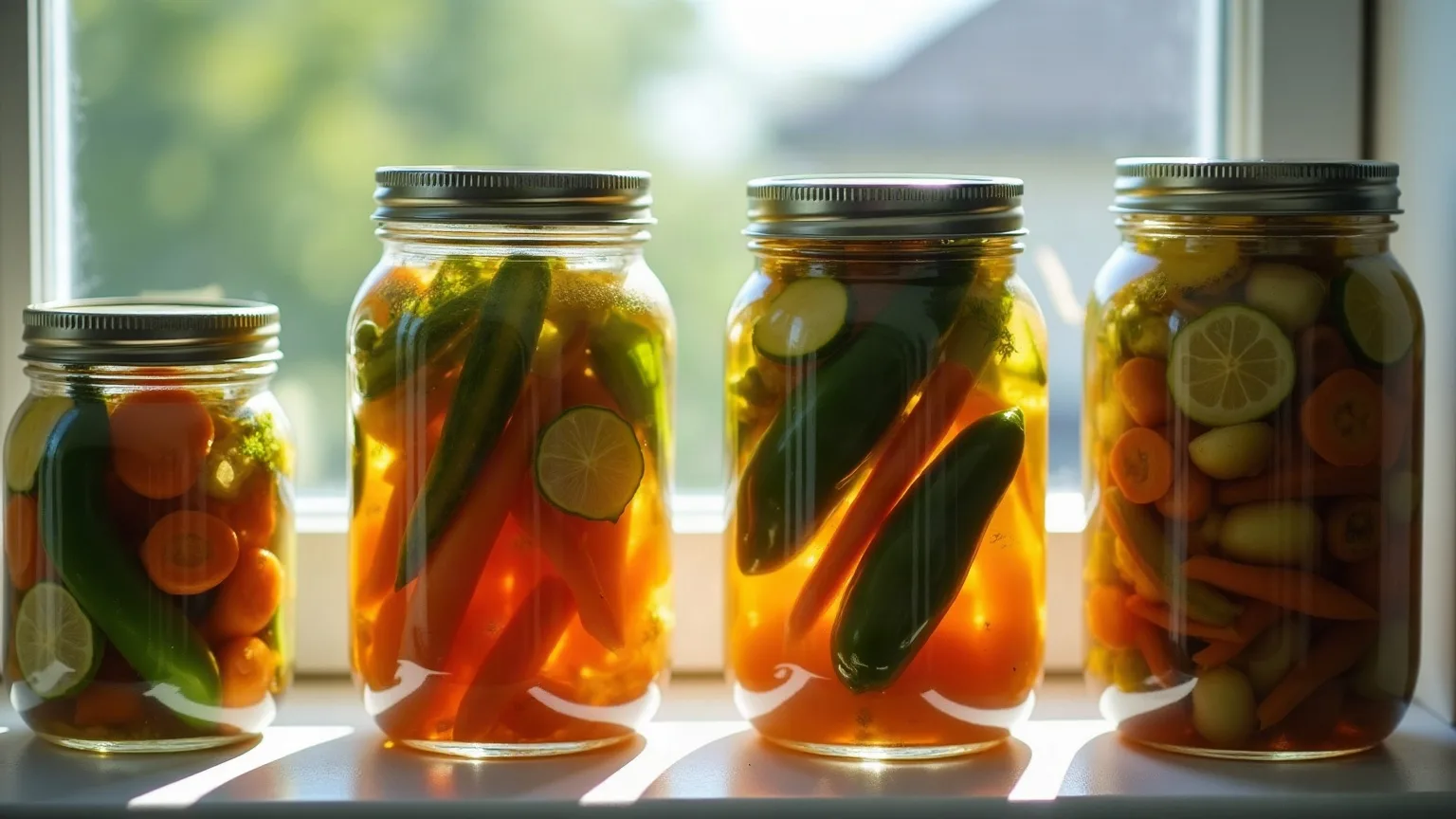
Pickles
The truthHit the right salt ratio and the jar protects itself. The whole craft is one number.
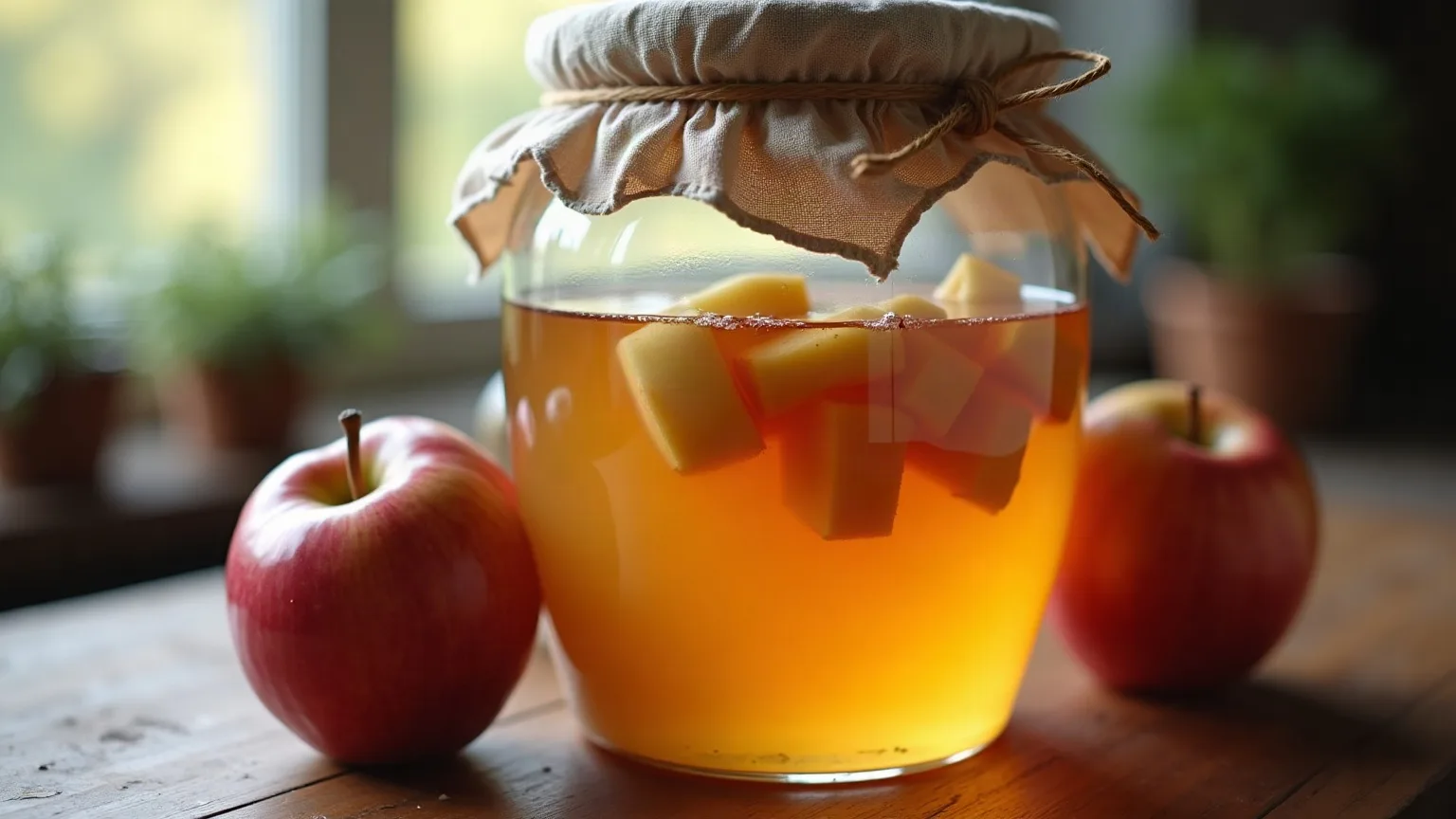
Apple cider vinegar
The truthApples, water, a little sugar and time. You cover the jar with a cloth and wait.
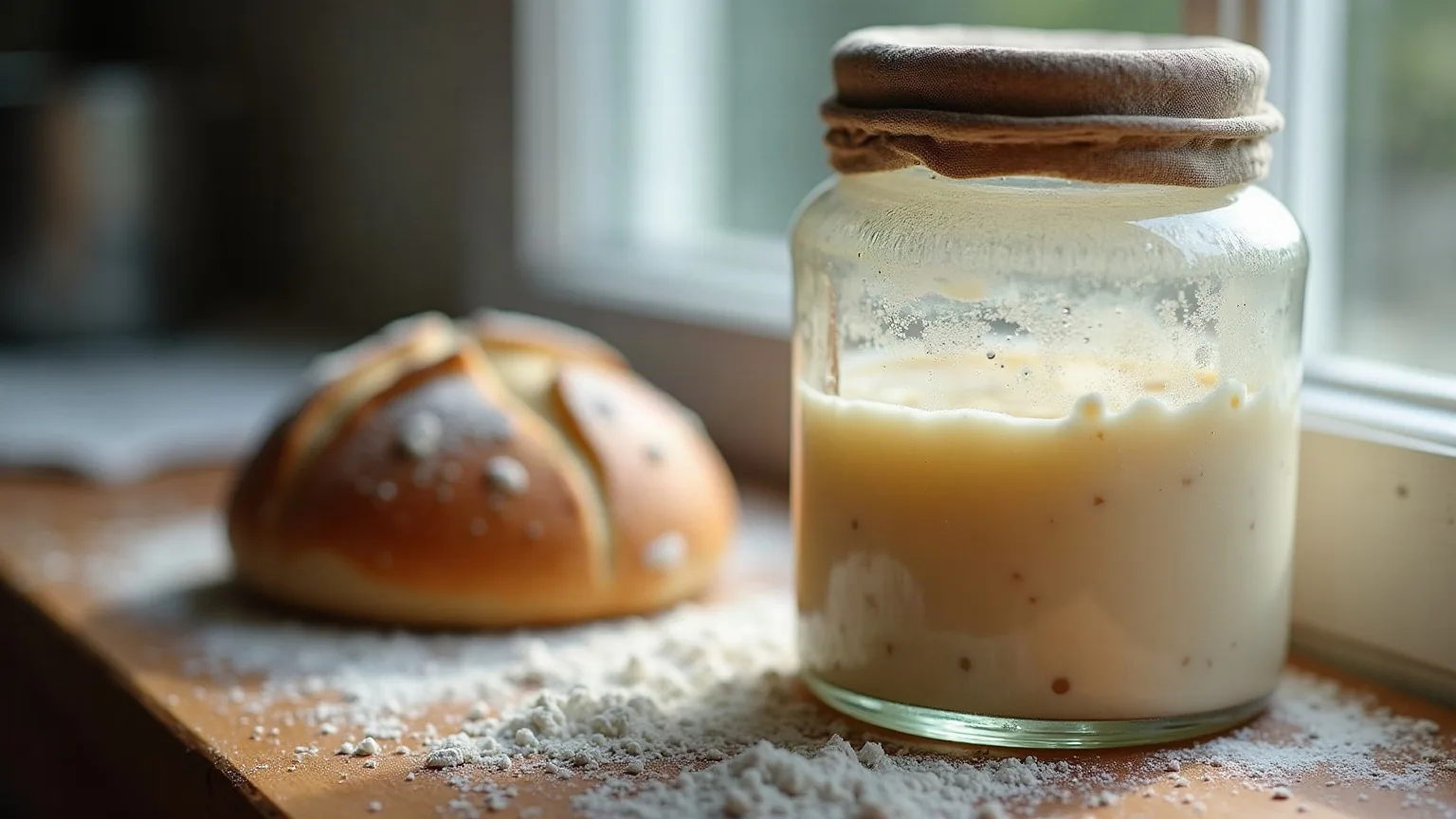
Sourdough starter
The truthFlour and water. Nothing else. Five days and you have your own; being “decades old” shapes the habit, not the taste.