
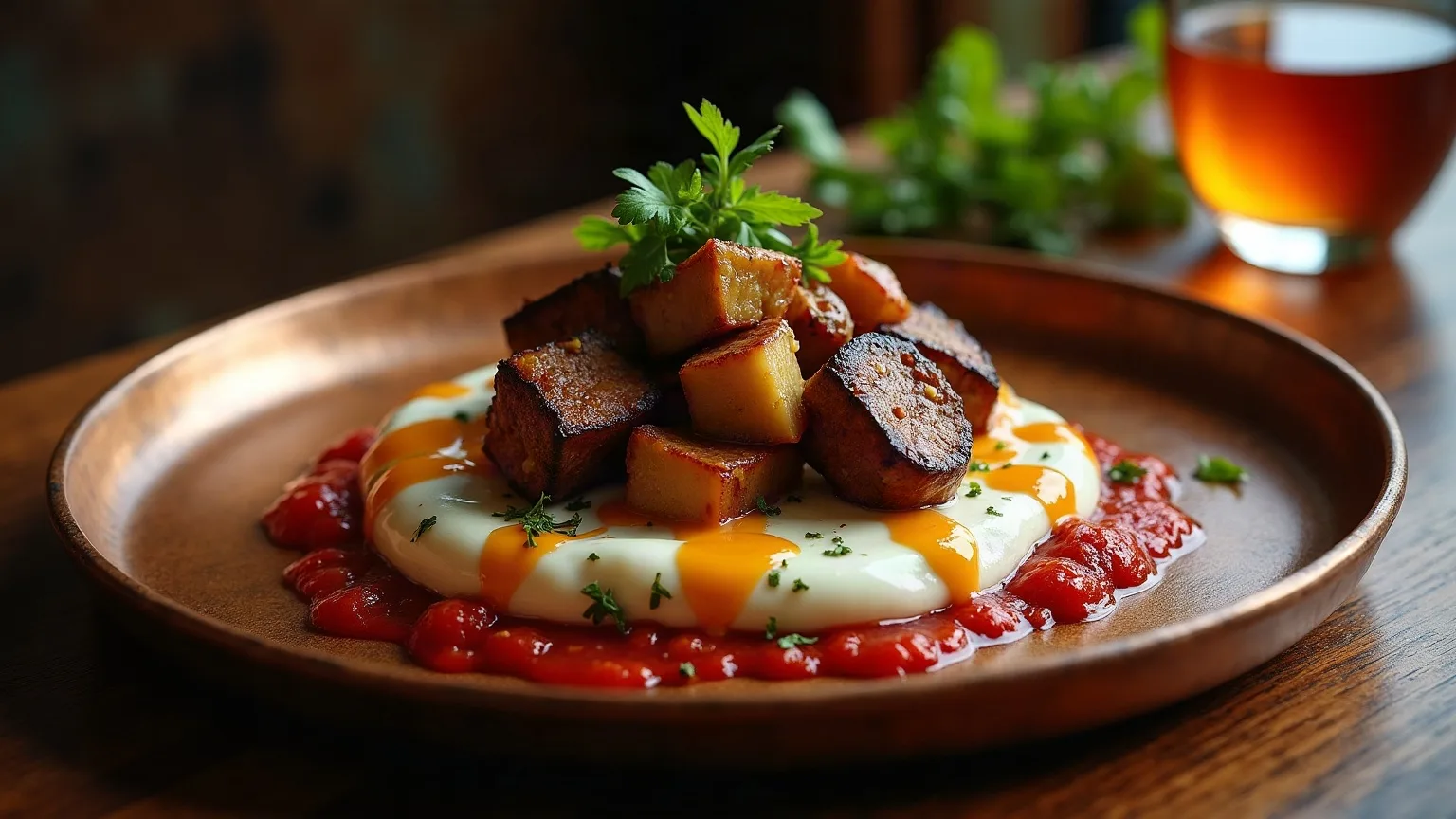
Ali Nazik
The Gaziantep classic: charred aubergine crushed with garlicky yoghurt under sautéed lamb. Everything rests on properly charring the aubergine — made with oven-roasted aubergine, this is simply not the dish.
This page says how to make it For what it is, where it comes from and the mechanism →
Method
-
Char the aubergines directly over a flame, turning until the skins are completely black. A ridged pan works, but they must meet real fire.
Why Charring is not about cooking it through: burning the skin drives smoke phenols into the flesh. Oven-roasted aubergine softens but never picks that up, and the smoke is the whole point.Frying dynamics Surface water is flashing to steam and pushing outward — that is the shield keeping the oil out. no way back
-
While hot, seal them in a bag or covered bowl for ten minutes, then peel and chop roughly.
Why Trapped steam loosens the cells under the skin and peeling becomes effortless. Rush it and half the flesh leaves with the skin. -
Crush the garlic with salt and stir it into the yoghurt. Fold in the aubergine and crush it roughly with a knife — never a blender.
Why A blender shreds the fibres and the mixture turns gluey. The texture should stay coarse — you want to feel pieces of aubergine.Starch still asleep The granules are just floating there doing nothing. No body arrives before 62 °C.
Salt · 0.46% Low. Everything reads flat and nothing steps forward.
-
Sear the lamb over high heat in a single uncrowded layer. Salt it only once it has taken colour.
Why Salt pulls water out by osmosis; add it early and the meat stews in its own juice, so Maillard never begins. A crust needs a dry surface.Starch gelatinised The granules soaked up water, swelled and burst into a network. It has thickened, and it will firm further as it cools. no way back
Frying dynamics Surface water is flashing to steam and pushing outward — that is the shield keeping the oil out. no way back
Salt · 0.35% Low. Everything reads flat and nothing steps forward.
-
Warm the aubergine yoghurt gently, spread it on the plate, top with the lamb and finish with butter sizzled with chilli.
Why Yoghurt splits above 85 °C. Warm is enough — the meat brings the rest of the heat to the plate.Starch gelatinised The granules soaked up water, swelled and burst into a network. It has thickened, and it will firm further as it cools. no way back
Salt · 0.32% Low. Everything reads flat and nothing steps forward.
This recipe was run through the engine step by step — what goes in when, and at what temperature and for how long. The reactions above come from that run.
peak 300 °C · 45 minutes · engine 1.0.0 · confidence low
What can go wrong here
The yoghurt sauce curdled⌄
What happened
The yoghurt passed 85 °C. The casein micelles lost their charge, the protein clumped and released the water it was holding. Once split, it does not come back.
By the numbers
Stabilise 500 g of yoghurt with a tablespoon of starch and one yolk, stir in one direction, never boil.
Without a thermometer
Catch the threshold by eye: the moment a few large bubbles appear on the surface you are around 85 °C, take it off. The sauce is ready when it coats the back of a spoon — draw a line with your finger and the line should hold.
The meat came out dry and tough⌄
What happened
The meat passed 70 °C. Past that point the muscle fibres contract and wring out their water, while collagen never gets the time to turn into gelatine. It loses moisture and never tenderises.
By the numbers
Beef medium at 57 °C, chicken at 74 °C. Rest it for 10 minutes off the heat; unrested meat leaves its juice on the plate.
Without a thermometer
The palm test: touch thumb to index finger and press the pad below your thumb — that firmness is rare. Middle finger is medium, ring finger is well done. Watch the juice too: pinkish and clear means you are there, running white means you went too far.
What it tastes like
The axes that define this recipe: aroma 74, umami 55, bitter 25.
This profile is computed rather than measured: the role-weighted average of its ingredients’ taste vectors, shifted by what the cooking does. The thin line is the database average on that axis.
Closest in taste
Not hand-picked: ranked by distance across the eight taste axes.
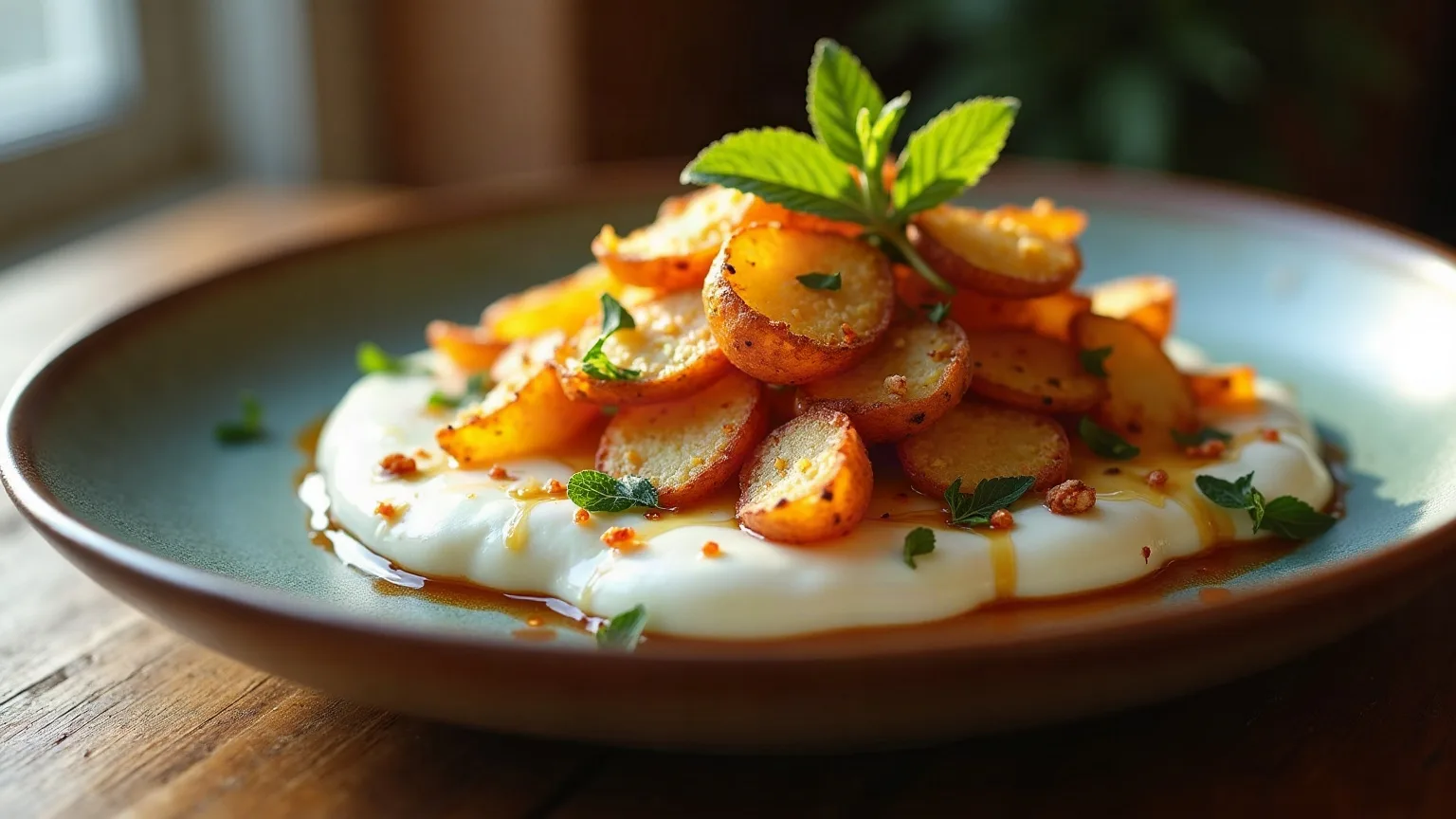
Crushed potatoes with yoghurt
Boil, crush, roast. A rough surface means more crust.…
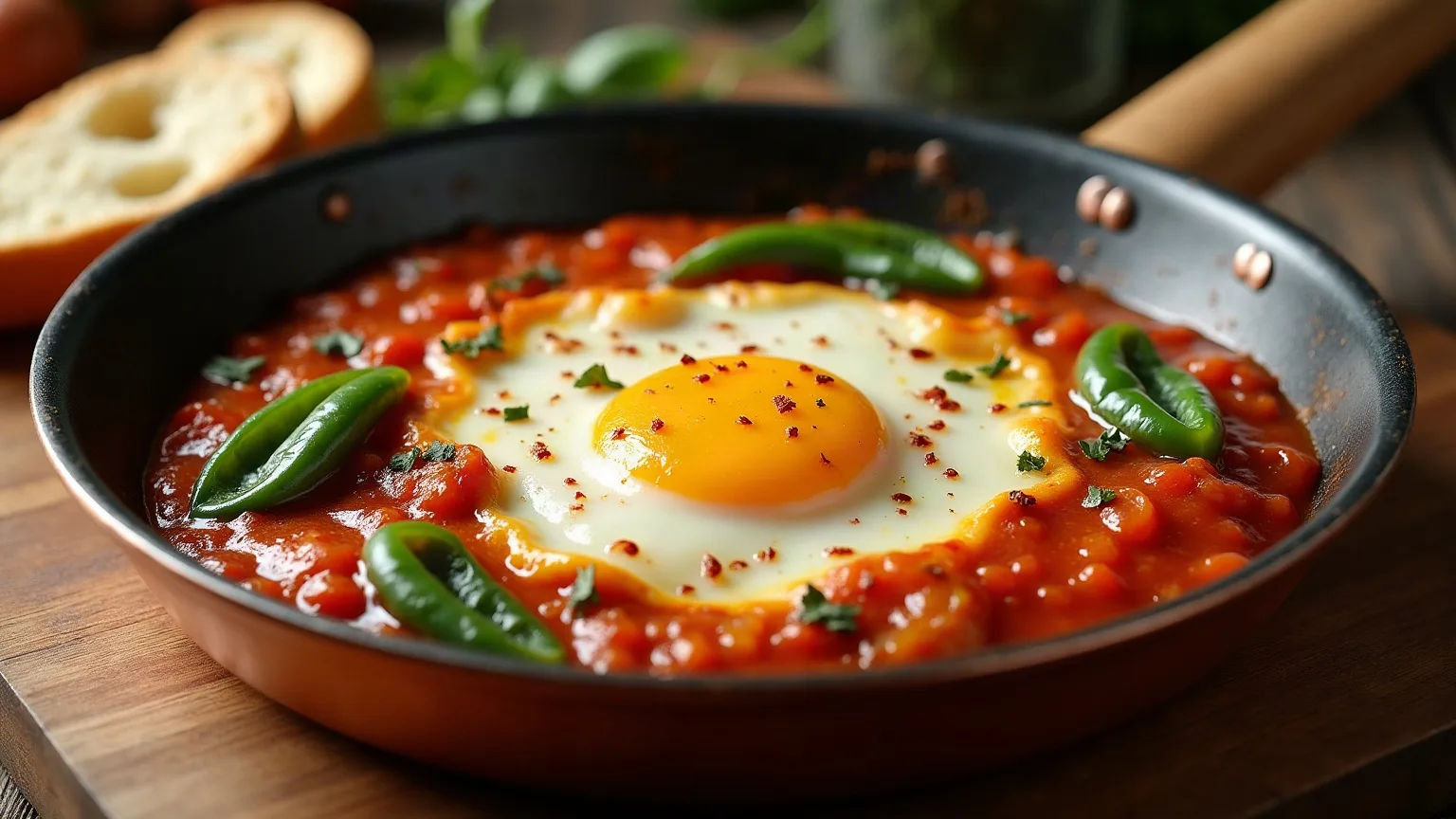
Menemen
Pepper, tomato and egg. Know the order and the heat and it takes fifteen minutes; miss them and you get a watery omelett…
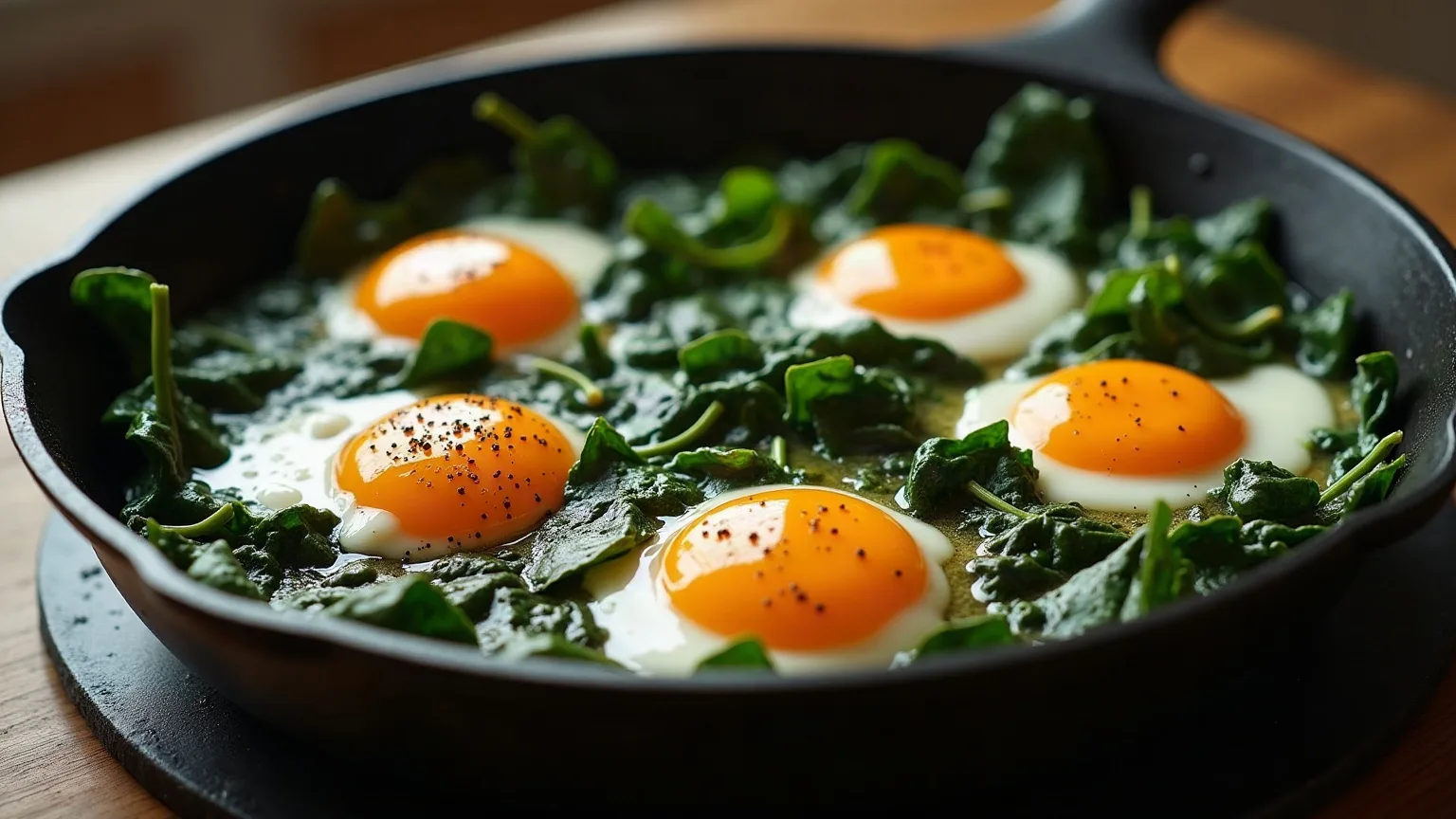
Spinach and eggs
Crack the eggs before the spinach has given up its water and a green puddle collects on the plate.…
Kalburabastı
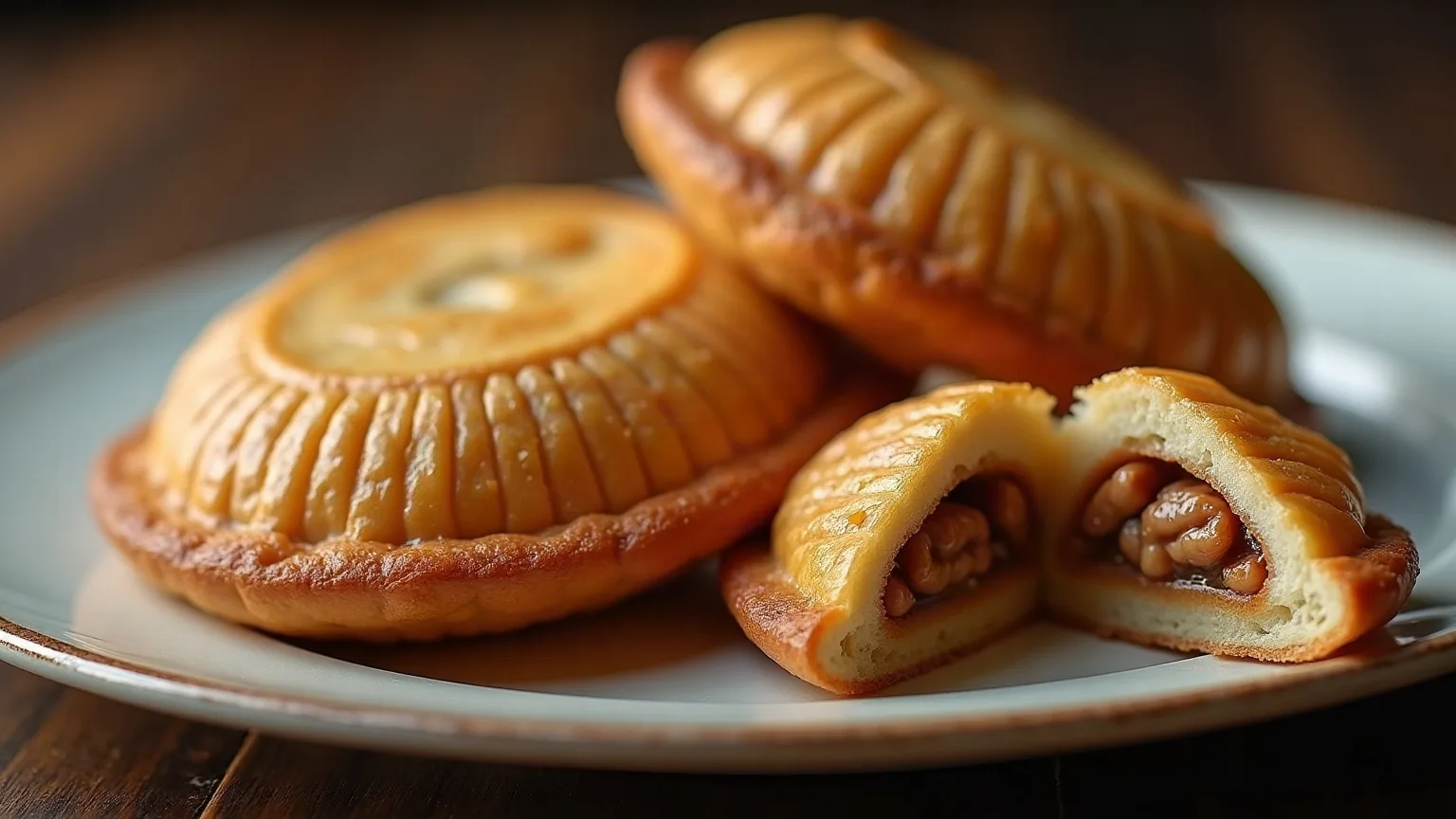
Walnut-filled dough ovals are pressed against a sieve to emboss ridges, baked and soaked in syrup. The name comes straig…