
Fresh acid-set cheese
The beliefCheese is assumed to need rennet, cultures and weeks of waiting.
The truthThe simplest fresh cheese is made in an hour by adding acid to hot milk. All it needs is 85 °C and a lemon.
How to make it
What you need
- 2 litres whole milk (pasteurised, not UHT)
- 60 ml lemon juice or 60 ml vinegar
- 1 teaspoon of salt
- A muslin cloth and a sieve
How the engine read this list (3 lines)
| 2060 g | Whole milk | milk |
| 62 g | Lemon juice or vinegar | lemon |
| 6 g | Salt | salt |
An empty weight means that line could not be turned into grams — either the amount is open ("to taste") or the ingredient has no record here. Neither enters the sum as zero; they do not enter it at all.
Heat the milk in a heavy pan, stirring now and then, to 85–90 °C. Without a thermometer, you are there when small bubbles form at the edge and the surface starts to tremble; do not let it boil over.
Turn off the heat. Add the lemon juice in three goes, stirring gently once after each. Within 30 seconds white curds should separate from a yellow-green liquid.
If the liquid is still milky, add 15 ml more acid. Stop as soon as it clears: too much acid makes the cheese sour and dry.
Leave it ten minutes, then pour it into a sieve lined with muslin. Set a bowl underneath and keep the whey for lor.
Sprinkle on the salt, twist the cloth and squeeze. Shape it into a flat block, put a 1–2 kg weight on top and press it in the fridge for 45 minutes.
The others that work the same way
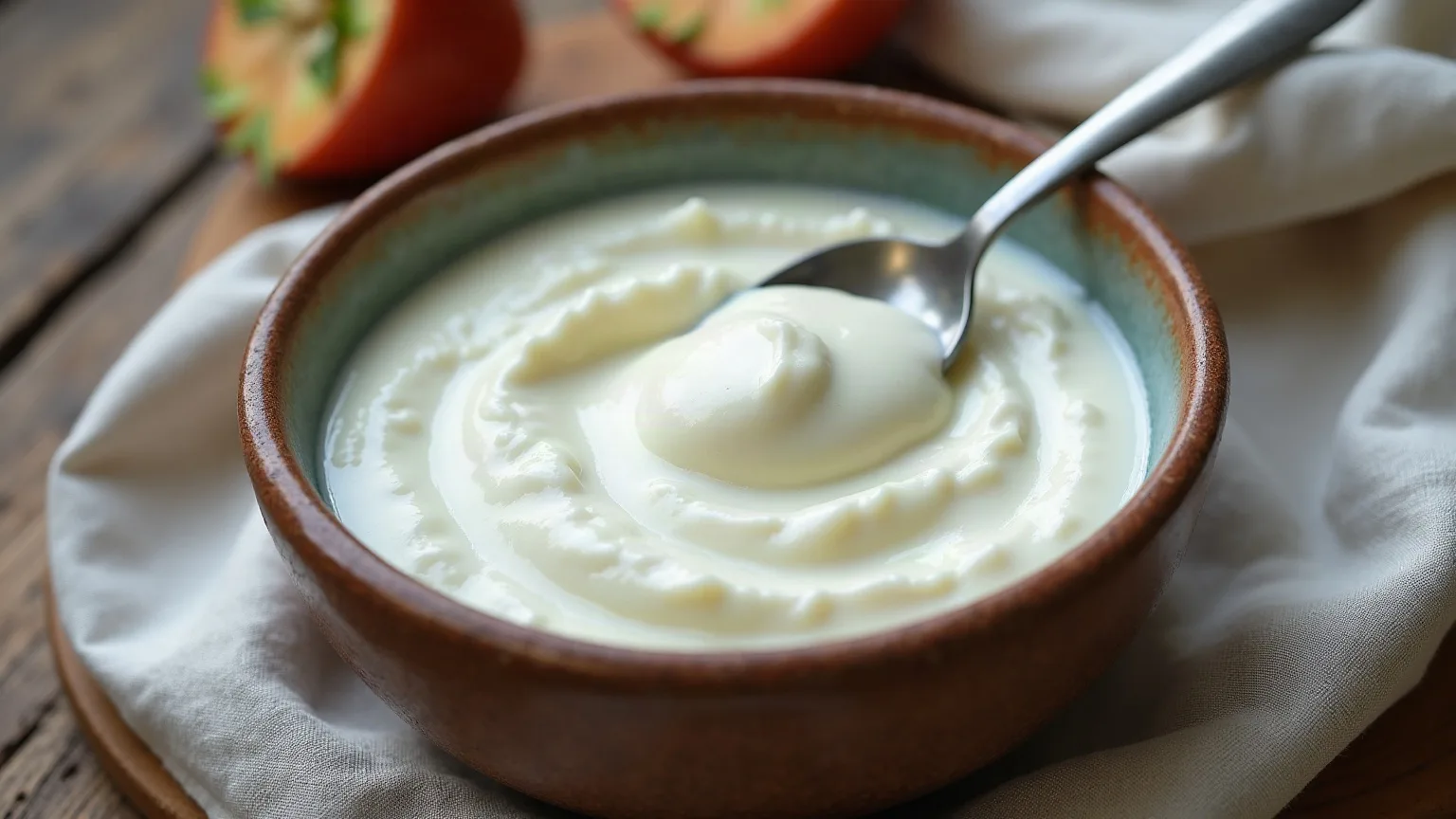
Yoghurt
The truthBesides milk you need one spoon of yoghurt. The rest is holding a temperature and waiting.
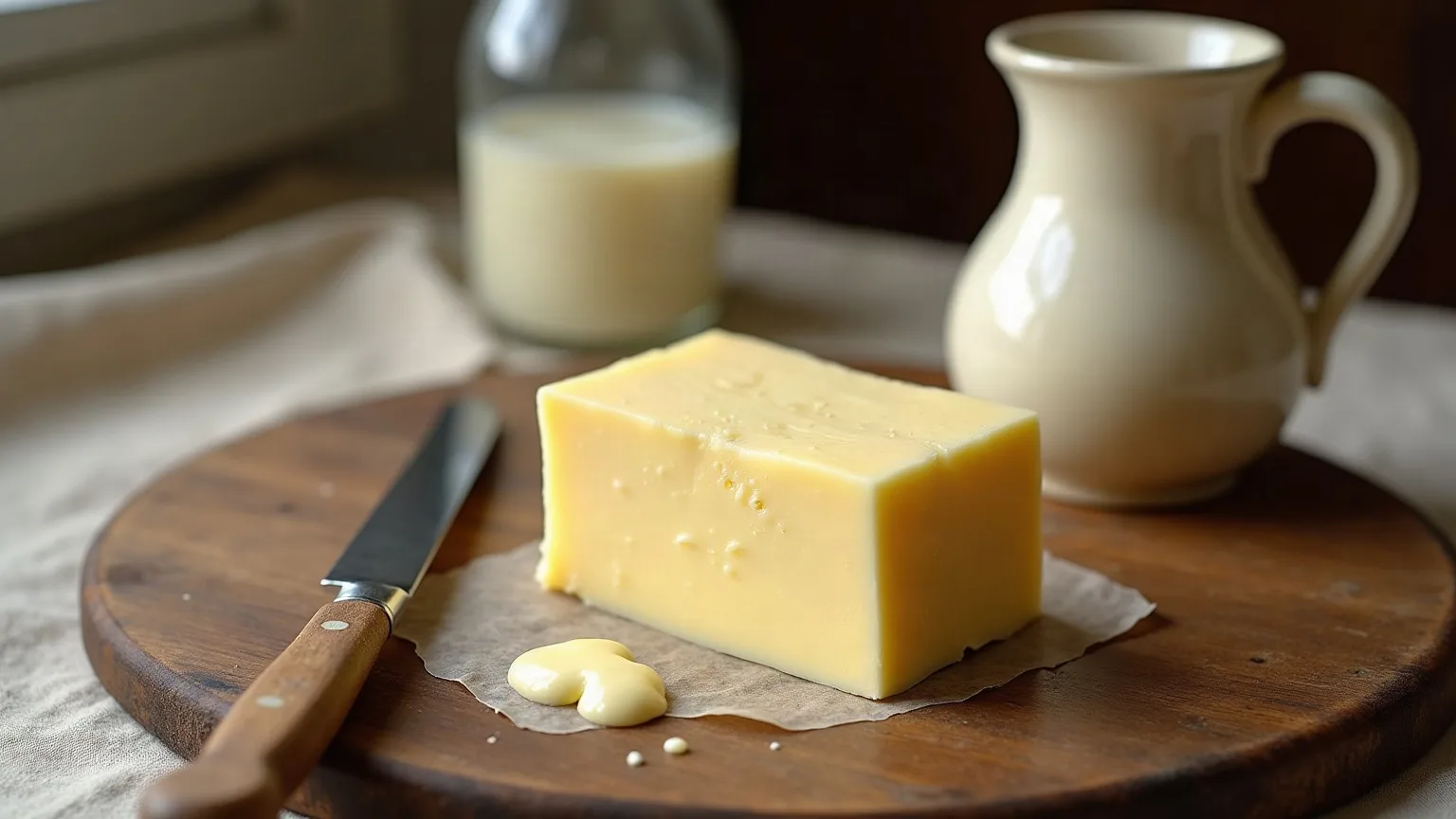
Butter
The truthIt is whipped cream taken too far. Around the fifteenth minute it separates on its own and you have both butter and buttermilk.
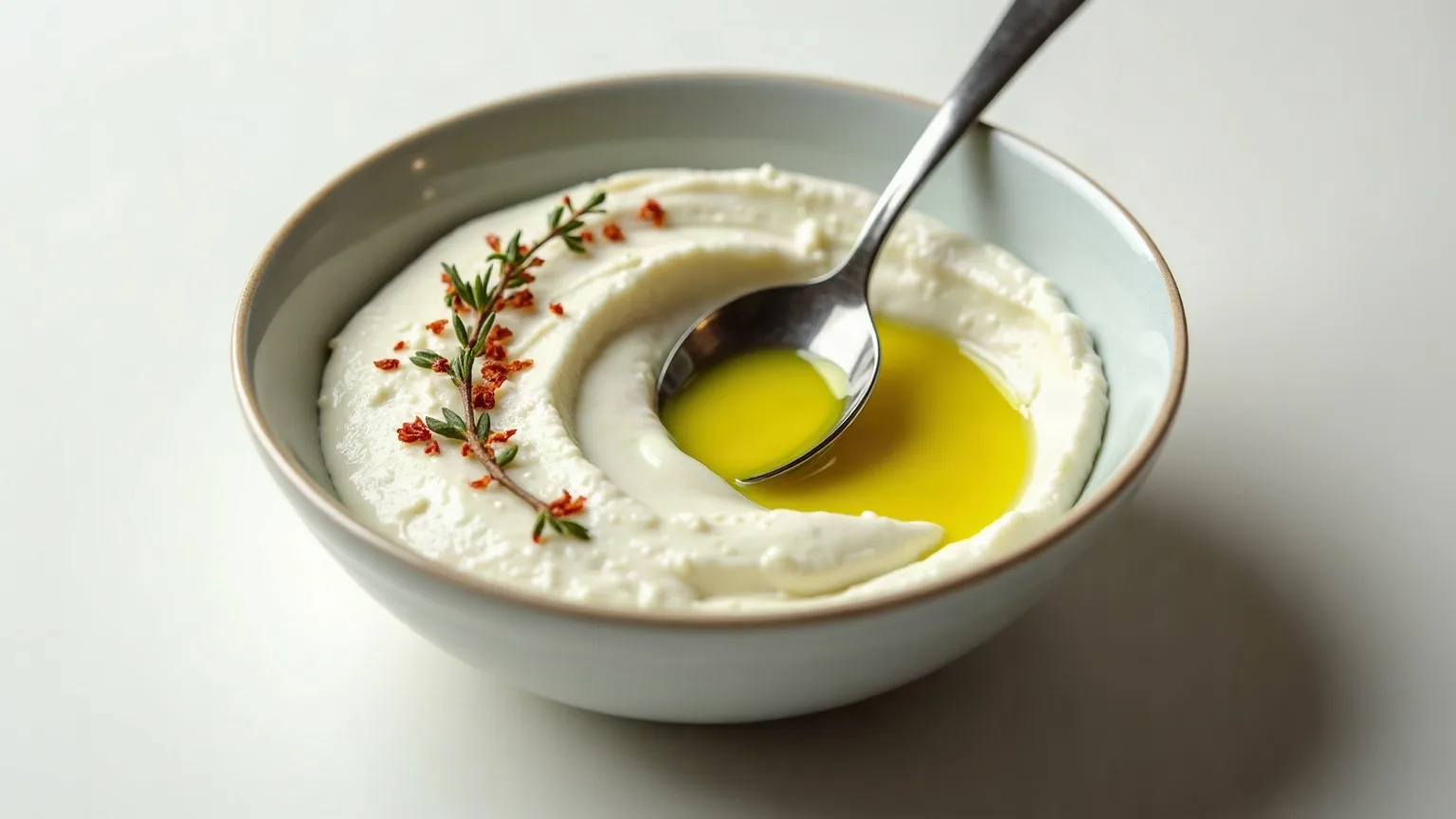
Labneh
The truthIt is strained yoghurt, and the only variable is time: six hours gives a thick yoghurt, twenty-four a cheese.