

Crêpes
Flour, egg, milk. The one condition for crêpes that do not tear is half an hour of rest.
Method
-
Whisk the eggs and milk, sift in the flour and beat until no lumps remain.
Starch still asleep The granules are just floating there doing nothing. No body arrives before 62 °C.
A gluten web is forming Gliadin and glutenin hydrated into an elastic net. This is what will hold the gas. no way back
-
Stir in the melted butter and rest the batter for thirty minutes.
Why The gluten relaxes and the starch takes up water; an unrested batter tears in the pan.Starch still asleep The granules are just floating there doing nothing. No body arrives before 62 °C.
A gluten web is forming Gliadin and glutenin hydrated into an elastic net. This is what will hold the gas. no way back
-
Heat the pan well, wipe it with oil, pour a ladle in and swirl to spread it.
Starch gelatinised The granules soaked up water, swelled and burst into a network. It has thickened, and it will firm further as it cools. no way back
A gluten web is forming Gliadin and glutenin hydrated into an elastic net. This is what will hold the gas. no way back
The egg is setting Too hot. The protein net over-tightened and pushed the water out: curdling and sponge. no way back
Maillard is running Amino acids have met reducing sugars. The crust, the roasted flavour and that smell all come from here. no way back
Frying dynamics Surface water is flashing to steam and pushing outward — that is the shield keeping the oil out. no way back
Too much starch. It will set into a rubbery gel once cool — add more liquid.
Stay under 82 °C. Lower the heat or move to a bain-marie — a split custard never comes back.
-
Turn it when the edges lift, and give the second side thirty seconds.
Starch gelatinised The granules soaked up water, swelled and burst into a network. It has thickened, and it will firm further as it cools. no way back
A gluten web is forming Gliadin and glutenin hydrated into an elastic net. This is what will hold the gas. no way back
The egg is setting Too hot. The protein net over-tightened and pushed the water out: curdling and sponge. no way back
Maillard is running Amino acids have met reducing sugars. The crust, the roasted flavour and that smell all come from here. no way back
Frying dynamics Surface water is flashing to steam and pushing outward — that is the shield keeping the oil out. no way back
Too much starch. It will set into a rubbery gel once cool — add more liquid.
Stay under 82 °C. Lower the heat or move to a bain-marie — a split custard never comes back.
This recipe was run through the engine step by step — what goes in when, and at what temperature and for how long. The reactions above come from that run.
peak 190 °C · 36 minutes · engine 1.0.0 · confidence low
What it tastes like
The axes that define this recipe: richness 59, umami 37, aroma 46.
This profile is computed rather than measured: the role-weighted average of its ingredients’ taste vectors, shifted by what the cooking does. The thin line is the database average on that axis.
Closest in taste
Not hand-picked: ranked by distance across the eight taste axes.

Fried eggs in butter
Eight minutes and one number: the butter must not pass 150 °C.…
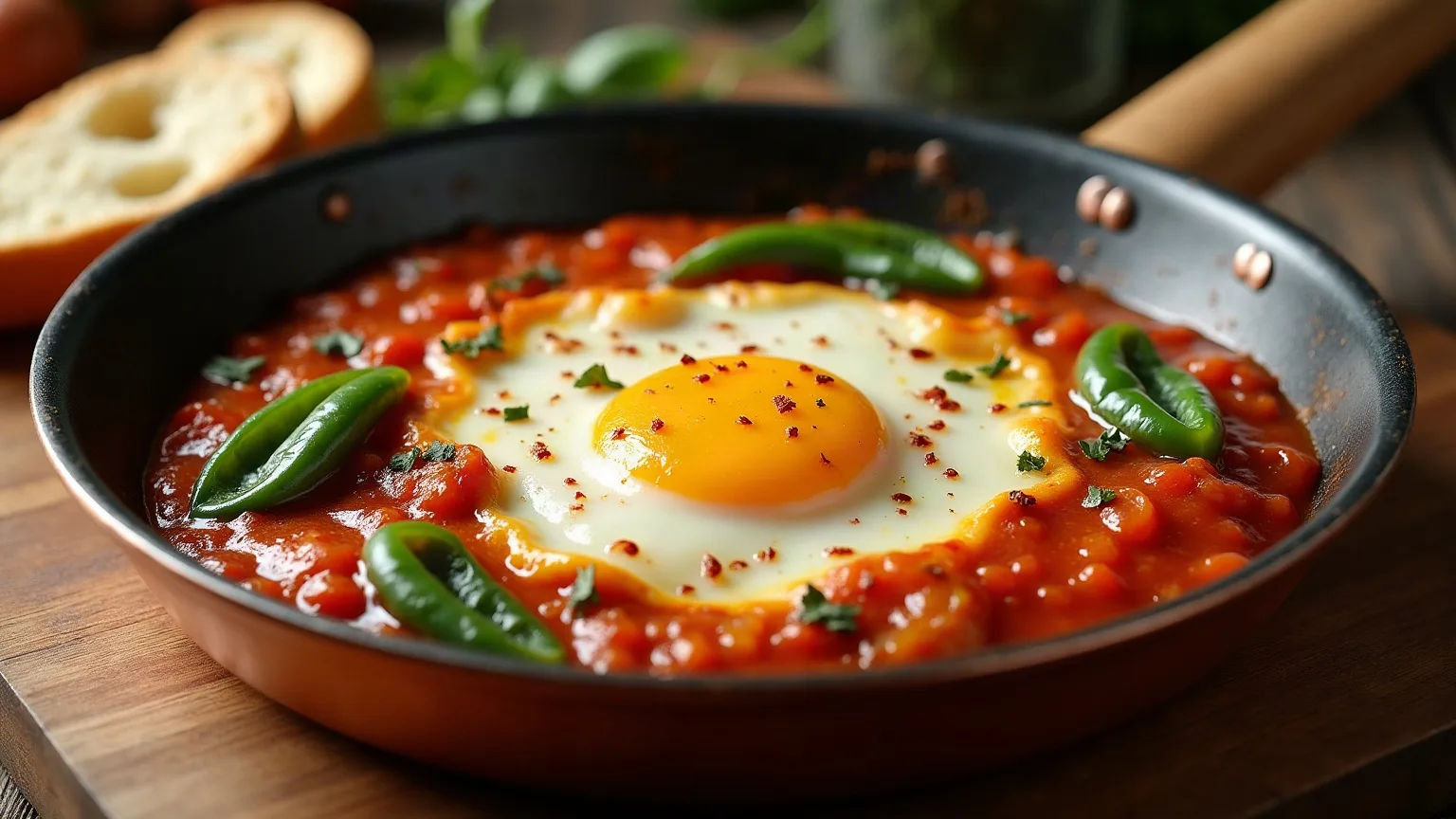
Menemen
Pepper, tomato and egg. Know the order and the heat and it takes fifteen minutes; miss them and you get a watery omelett…

Spinach and eggs
Crack the eggs before the spinach has given up its water and a green puddle collects on the plate.…
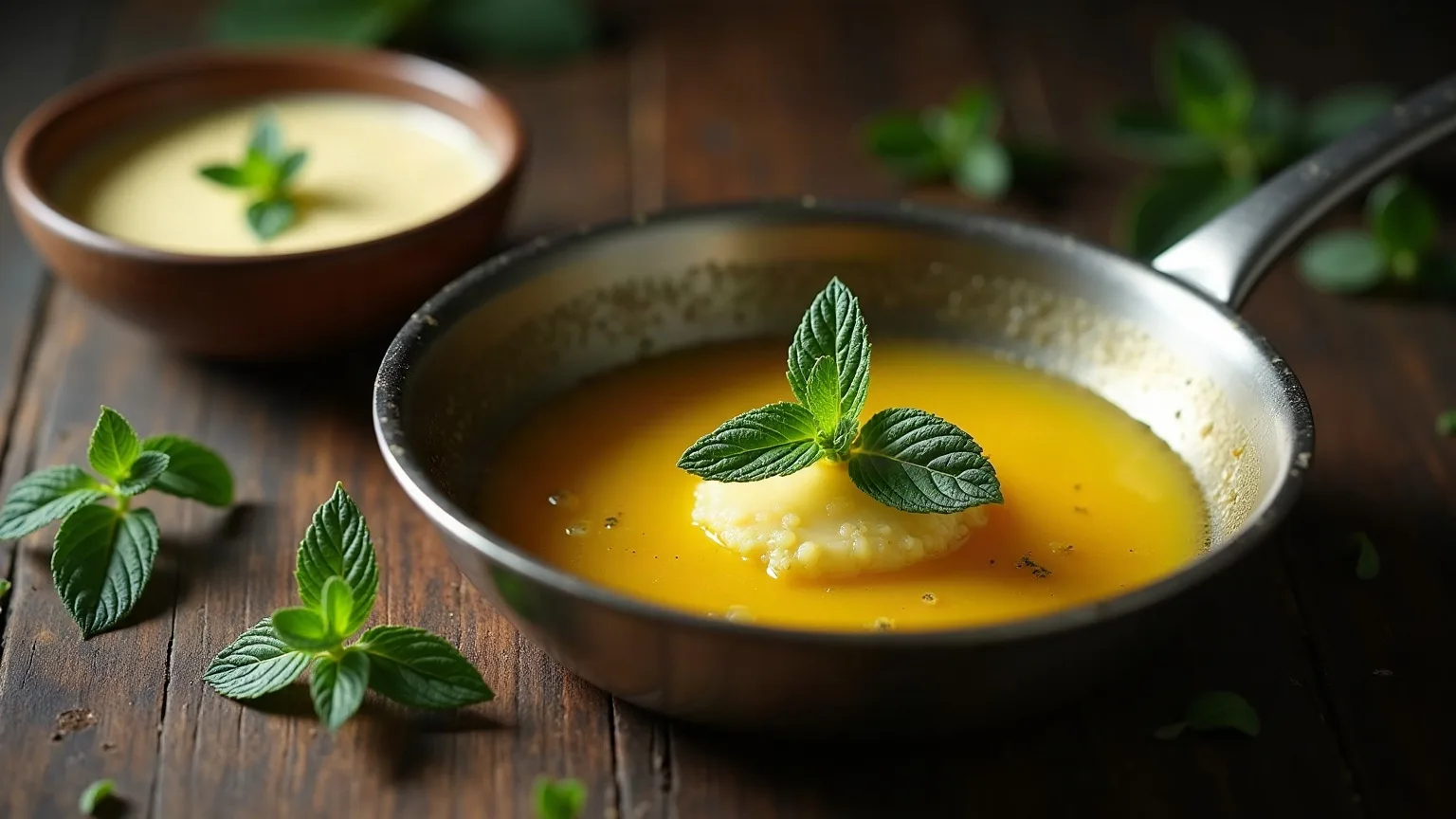
Dried mint in butter
Dried mint bloomed briefly in hot butter and poured over a yoghurt dish. Standard on yayla çorbası, mantı, cacık and hay…