
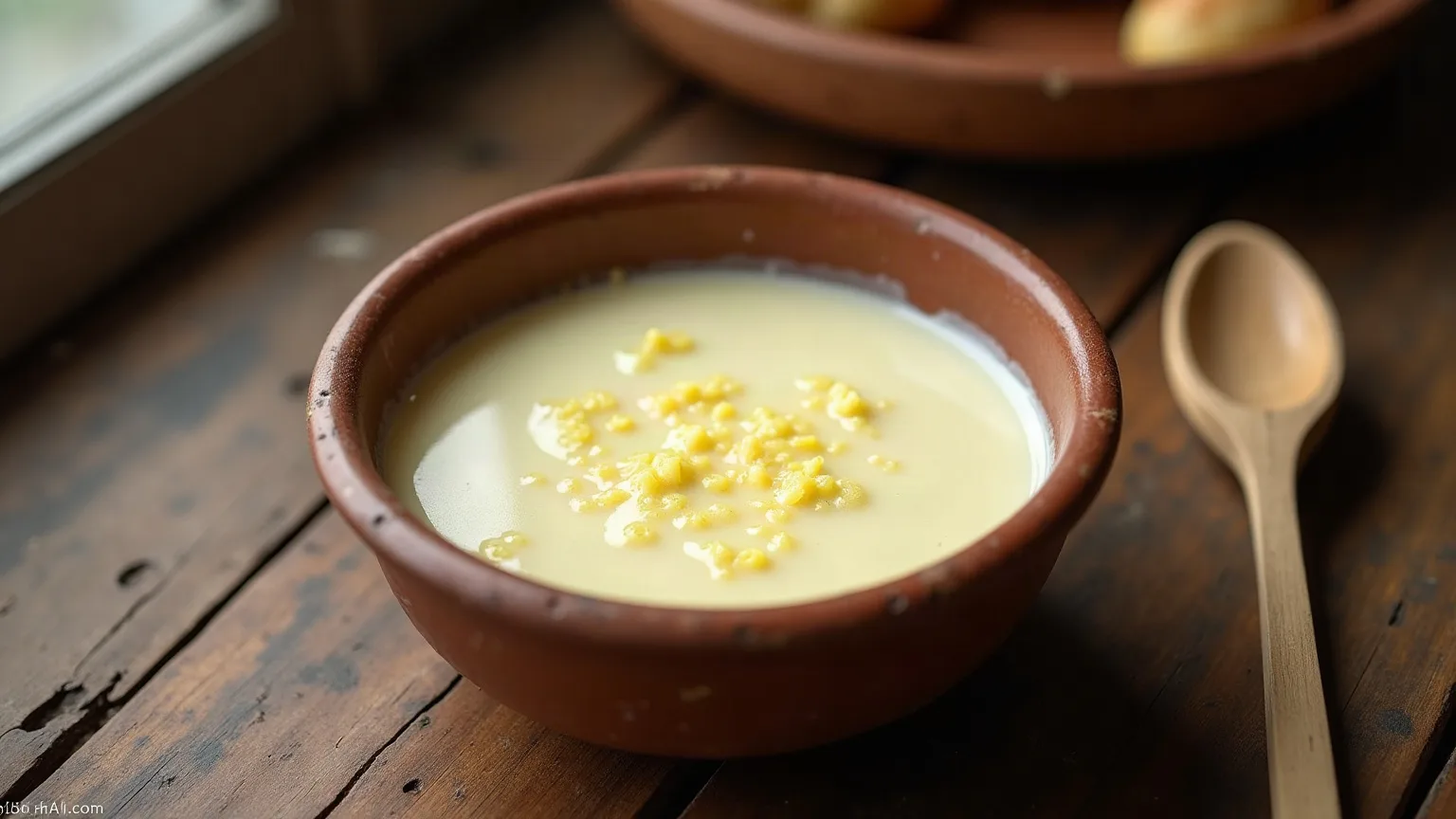
Churn buttermilk
Not to be confused with ordinary ayran — it is a different substance: the liquid left after butter has been churned out of yoghurt. Yoghurt destined for butter is deliberately fermented longer, which is why churn ayran is markedly sourer.
The yoghurt is let down with about 50% cold water, churned in a skin, a wooden barrel or a yayık, the butter lifted off, and 0.5–1.0% salt added to what remains. The high acidity is deliberate: it helps mechanically destabilise the fat globule membrane and drives phase inversion.
What it is made of
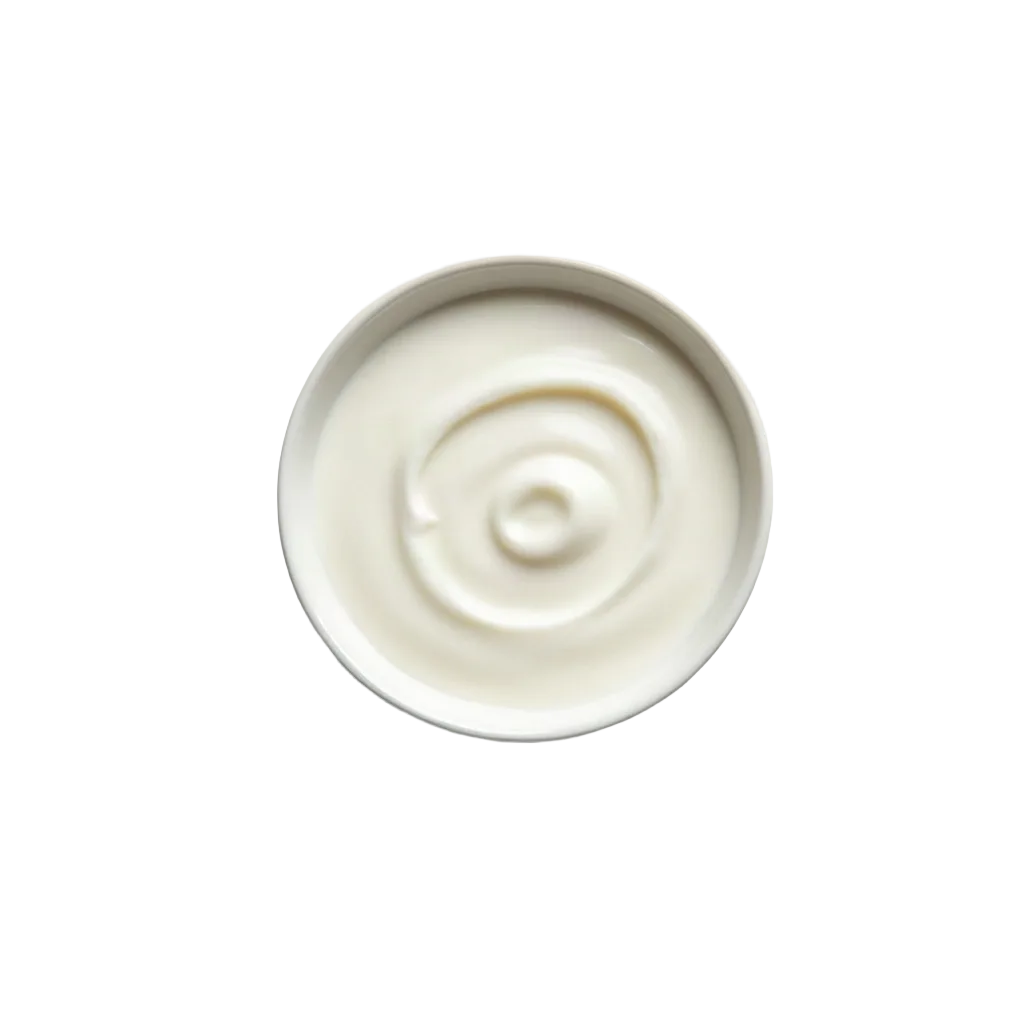 Yoghurt
pH 4.4 · splits above 85 °C
Dairy: it brings creaminess, protein and calcium.
Temper it with a few spoons of the hot liquid before it goes in; added straight, it splits.
H2O
Yoghurt
pH 4.4 · splits above 85 °C
Dairy: it brings creaminess, protein and calcium.
Temper it with a few spoons of the hot liquid before it goes in; added straight, it splits.
H2O
 Water
Starch only gelatinises above 60 °C with water
Liquid: it makes the medium and carries the heat.
Do not add water to a vegetable dish: it is already 90% water and makes its own liquid under a lid.
Sa2
Water
Starch only gelatinises above 60 °C with water
Liquid: it makes the medium and carries the heat.
Do not add water to a vegetable dish: it is already 90% water and makes its own liquid under a lid.
Sa2
 Salt
0.8–1.5% of the weight of the food
Seasoning: it sets the perception and balances the salt.
0.8–1.5% of the weight of the food. Coarse and fine salt do not weigh the same by the spoon, so weigh it.
Salt
0.8–1.5% of the weight of the food
Seasoning: it sets the perception and balances the salt.
0.8–1.5% of the weight of the food. Coarse and fine salt do not weigh the same by the spoon, so weigh it.
What it tastes like
The axes that define this dish: sour 37, salty 33 — the ones sitting clearly above the average.
This profile is computed rather than measured: the role-weighted average of its ingredients’ taste vectors, shifted by what the cooking does. The thin line is the database average on that axis.
How it is made
-
Put full-fat yoghurt in a churn or a lidded vessel and add cold water at half its weight.
-
Churn for ten to fifteen minutes, until yellow flecks of butter gather at the surface.
Why Agitation tears the membrane around the fat droplets; the freed fat coalesces and floats. -
Skim the butter off. The sour liquid underneath is the yayık ayranı.
-
Salt it and serve cold. It keeps three days in the fridge; shake it if it separates.
Where it comes from
Not an industrial product: small scale, and mostly drunk at home while the butter is being made.