
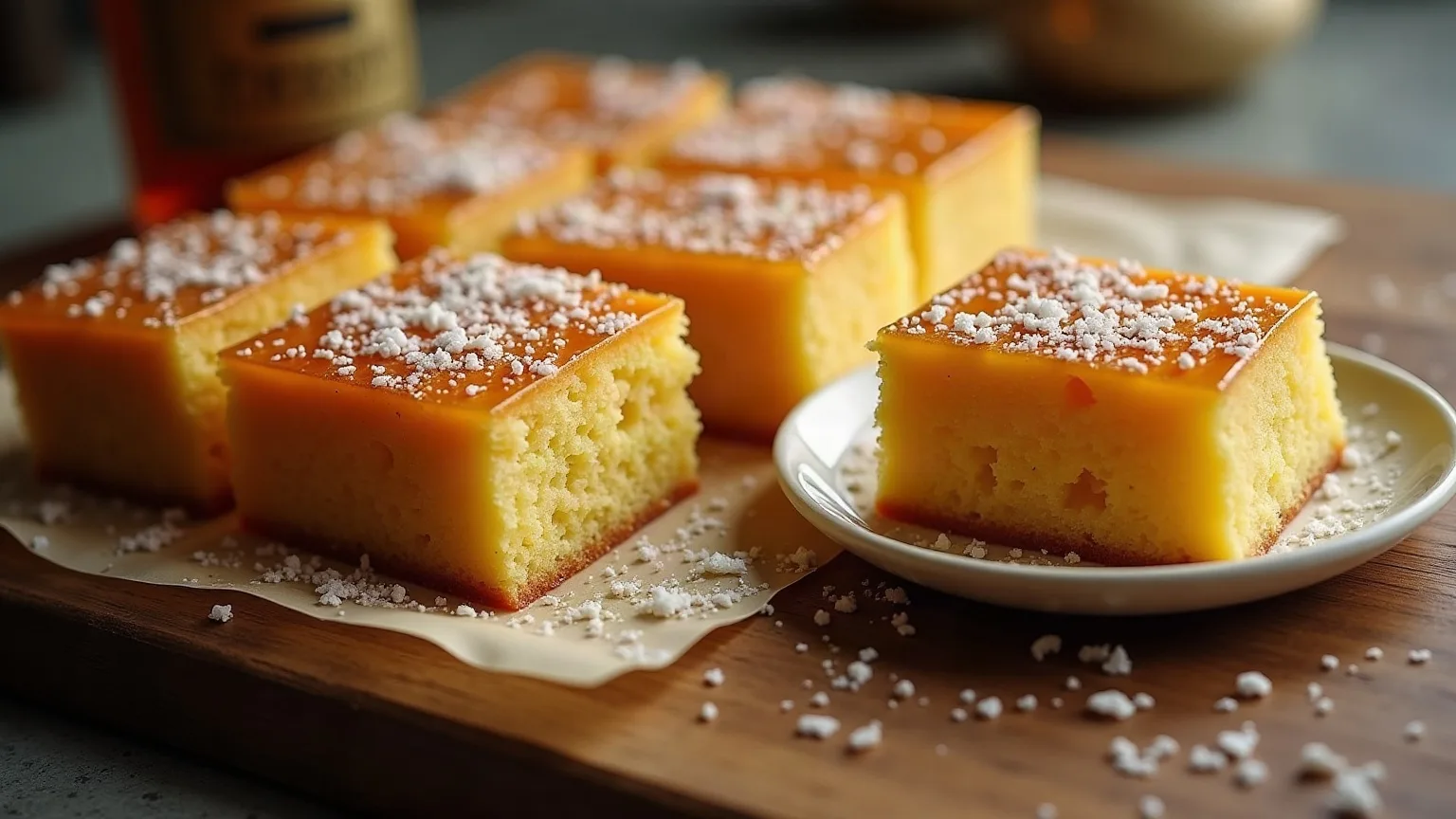
Revani
A semolina syrup cake. Butter is whipped to a foam, then eggs, sugar and semolina go in; baked at 165 °C and soaked with light syrup while still warm.
Semolina’s coarse particle size limits gluten development, which is what gives the crumb its open, absorbent structure.
What it is made of
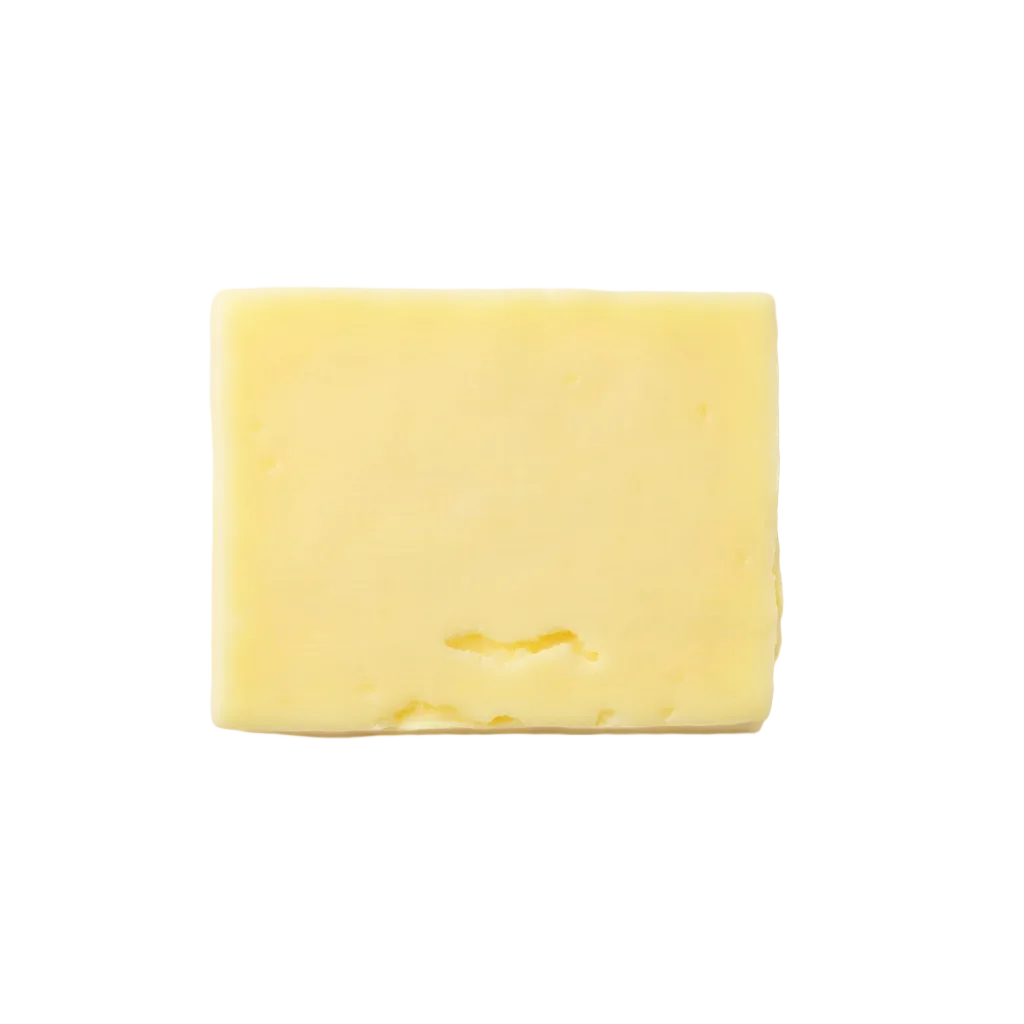 Butter
Smoke point 150 °C · milk solids burn
Fat: it carries the aroma and softens the texture.
Add a spoon of neutral oil alongside it: the mix survives a higher temperature before the solids burn.
Eg
Butter
Smoke point 150 °C · milk solids burn
Fat: it carries the aroma and softens the texture.
Add a spoon of neutral oil alongside it: the mix survives a higher temperature before the solids burn.
Eg
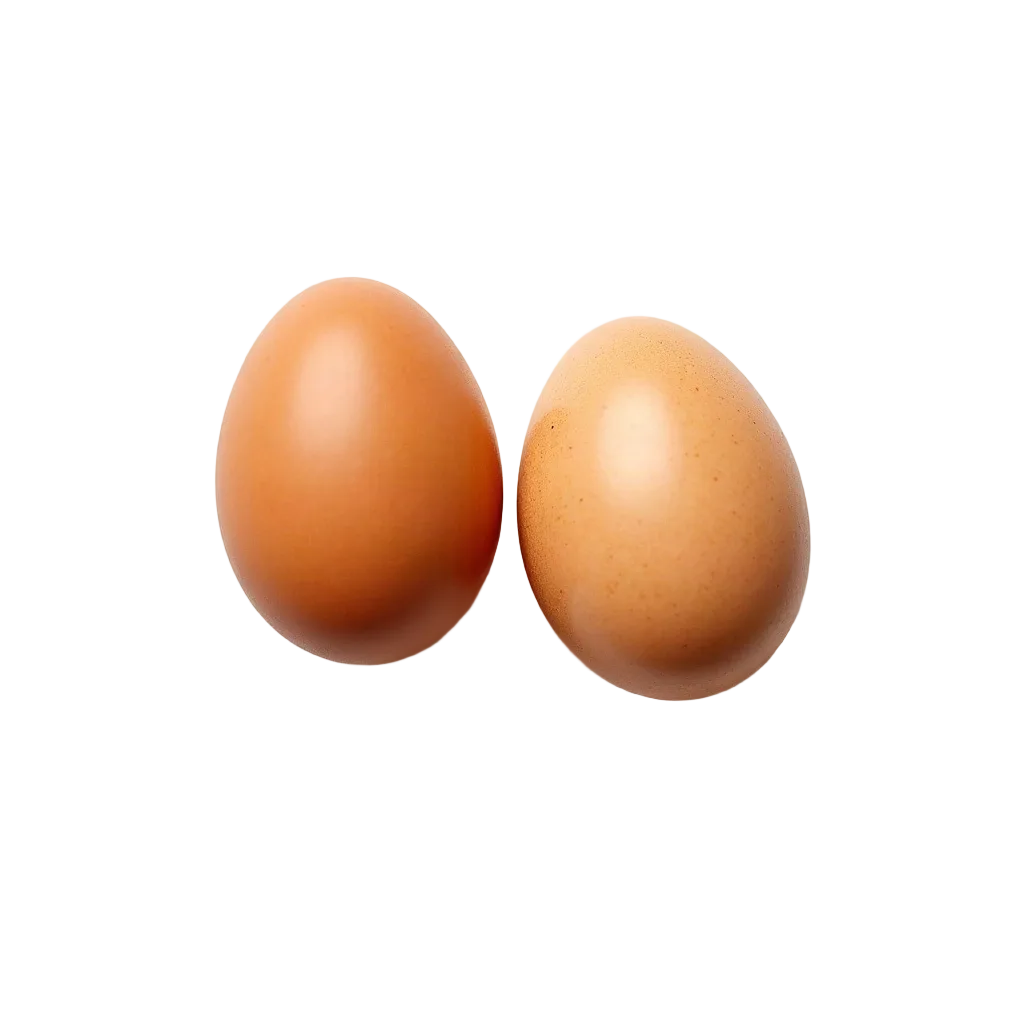 Egg
White 62 °C · yolk 65 °C
Gives body: the bulk of the plate and its starch.
Crack it on a flat surface, not the rim of the bowl: a sharp edge drives shell into the egg.
Sg
Egg
White 62 °C · yolk 65 °C
Gives body: the bulk of the plate and its starch.
Crack it on a flat surface, not the rim of the bowl: a sharp edge drives shell into the egg.
Sg
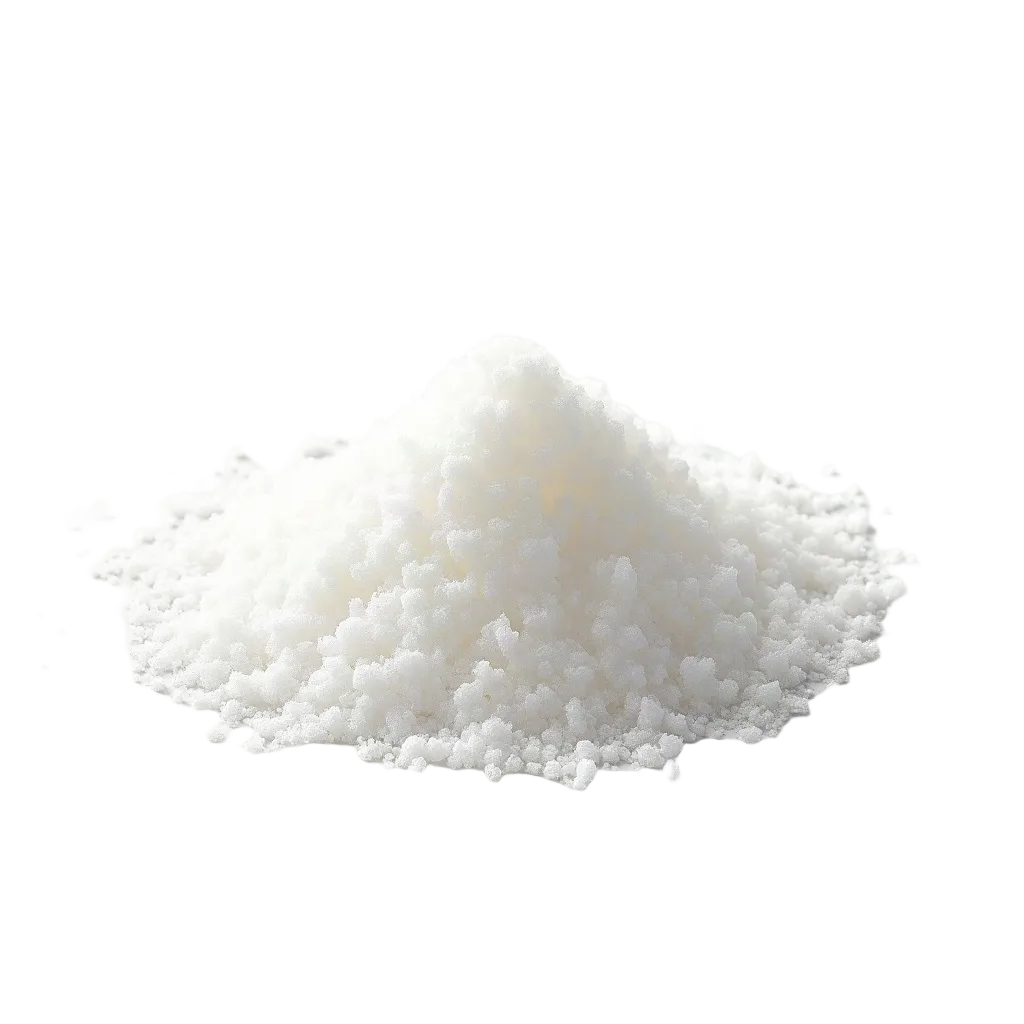 Sugar
Caramelises at 160 °C
Sweetens: it binds water and caramelises.
A teaspoon in a tomato dish does not sweeten it; it takes the edge off the acid.
Sugar
Caramelises at 160 °C
Sweetens: it binds water and caramelises.
A teaspoon in a tomato dish does not sweeten it; it takes the edge off the acid.
What it tastes like
The axes that define this dish: sweet 45, umami 33 — the ones sitting clearly above the average.
This profile is computed rather than measured: the role-weighted average of its ingredients’ taste vectors, shifted by what the cooking does. The thin line is the database average on that axis.
How it is made
-
Beat the butter with the sugar to a foam.
Why Revani is light because of the air trapped here, not because of a chemical leaven. -
Add the eggs one at a time, then fold in the semolina and flour.
-
Pour into a tray and bake at 165 °C for 35 minutes.
-
Slice it the moment it leaves the oven and pour cold syrup over.
Where it comes from
Recorded as created in the Ottoman palace kitchen to mark the conquest of the Revan region in the Safavid period, and documented in Melceü’t-Tabbâhîn.