
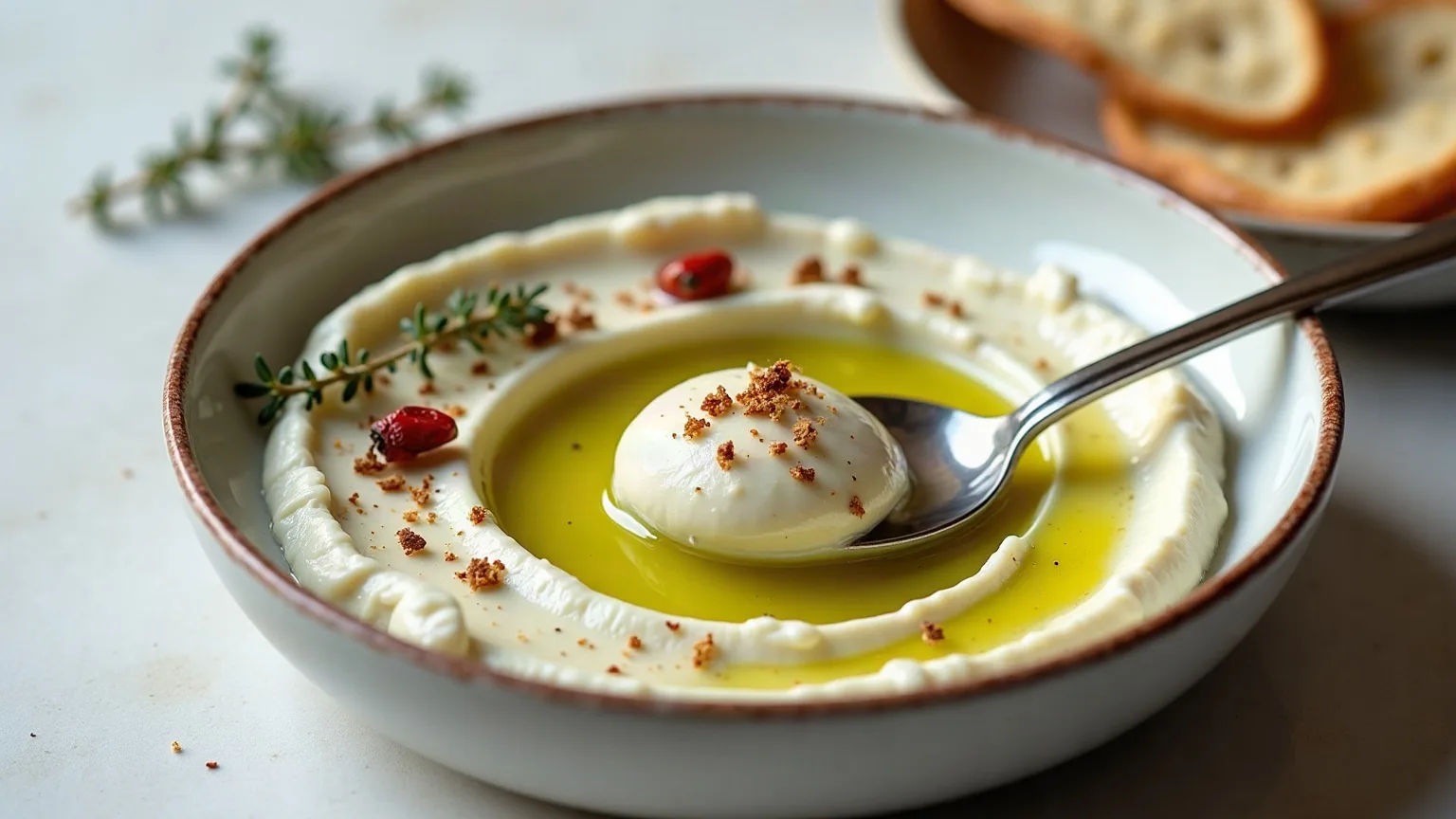
Labneh
Yoghurt strained further than süzme, salted, and taken to a spreadable consistency. Süzme is lighter and silkier; labne is denser and sharper, and is served with olive oil.
Turkish regulation draws an interesting line: notification 2022/44 on fermented milk products deliberately excludes labne, on the grounds that it is made with yoghurt culture and no rennet, so it can be regulated under its own notification.
What it is made of
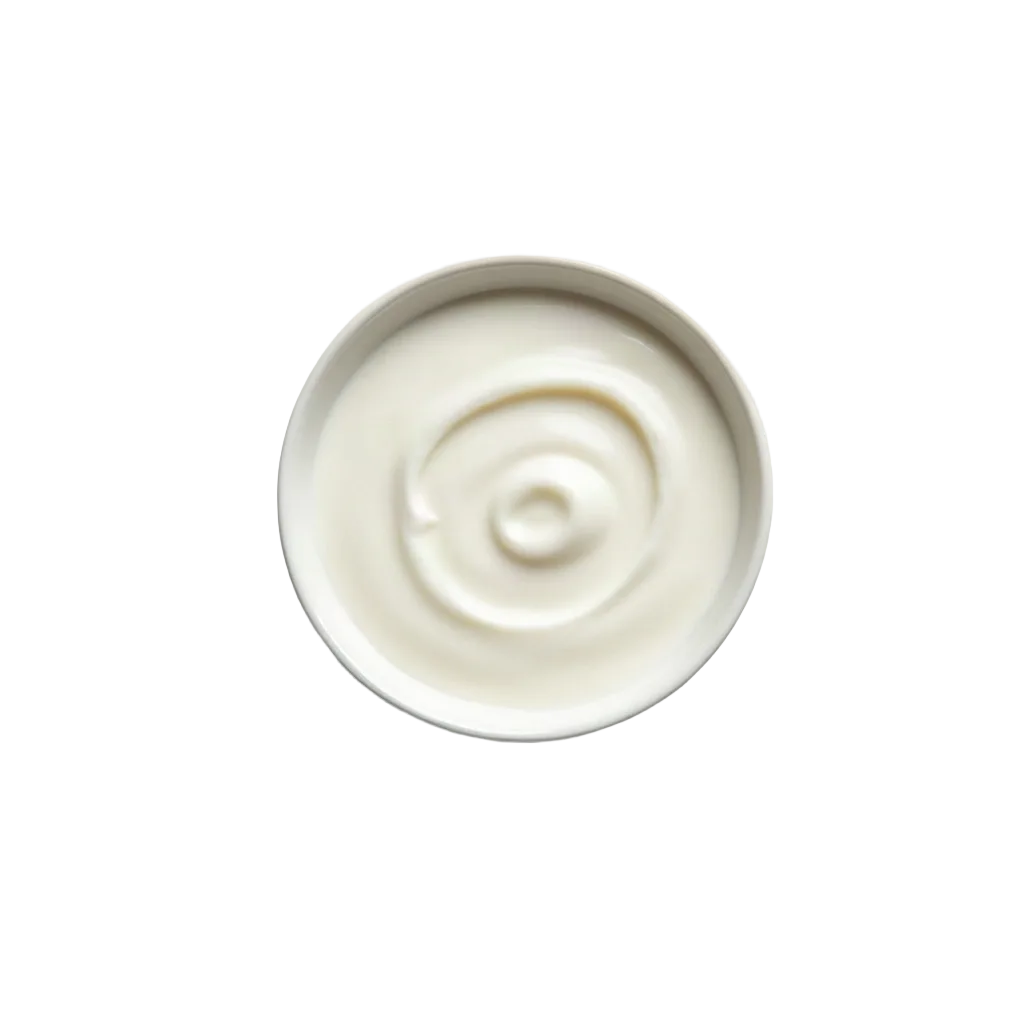 Yoghurt
pH 4.4 · splits above 85 °C
Dairy: it brings creaminess, protein and calcium.
Temper it with a few spoons of the hot liquid before it goes in; added straight, it splits.
Sa2
Yoghurt
pH 4.4 · splits above 85 °C
Dairy: it brings creaminess, protein and calcium.
Temper it with a few spoons of the hot liquid before it goes in; added straight, it splits.
Sa2
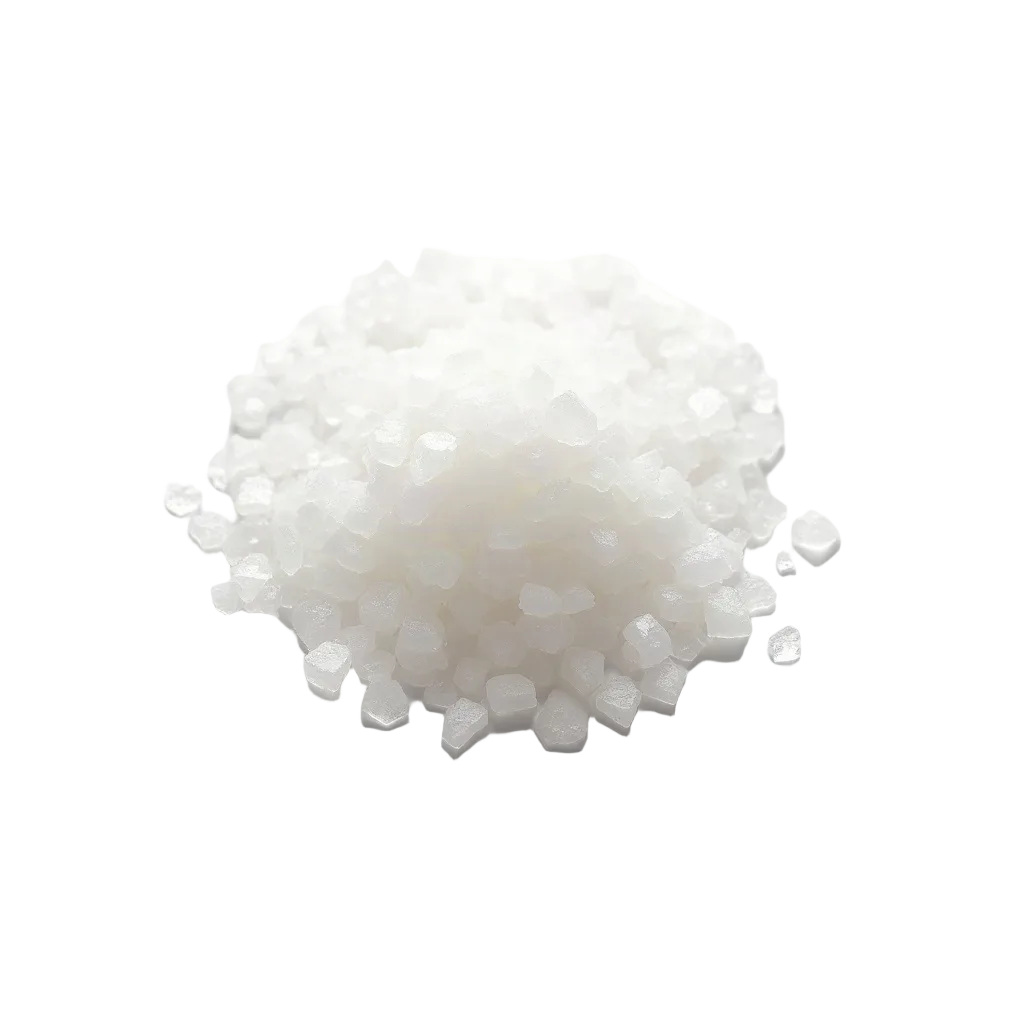 Salt
0.8–1.5% of the weight of the food
Seasoning: it sets the perception and balances the salt.
0.8–1.5% of the weight of the food. Coarse and fine salt do not weigh the same by the spoon, so weigh it.
Oo
Salt
0.8–1.5% of the weight of the food
Seasoning: it sets the perception and balances the salt.
0.8–1.5% of the weight of the food. Coarse and fine salt do not weigh the same by the spoon, so weigh it.
Oo
 Olive oil
Smoke point 190–210 °C (EVOO)
Fat: it carries the aroma and softens the texture.
Do not burn extra virgin on high heat; use it as a finishing oil and leave the frying to a plain one.
Olive oil
Smoke point 190–210 °C (EVOO)
Fat: it carries the aroma and softens the texture.
Do not burn extra virgin on high heat; use it as a finishing oil and leave the frying to a plain one.
What it tastes like
The axes that define this dish: richness 47, salty 25, sour 28 — the ones sitting clearly above the average.
This profile is computed rather than measured: the role-weighted average of its ingredients’ taste vectors, shifted by what the cooking does. The thin line is the database average on that axis.
How it is made
-
Stir salt through the yoghurt at 1% of its weight.
-
Strain it in muslin in the fridge for twelve hours.
Why A kilo of yoghurt leaves about 450 g: most of what goes is water and lactose. -
Do not weigh it down; let gravity do it.
Why Pressing is faster but compacts the texture and costs it the creaminess. -
For keeping, roll it into balls and cover them with olive oil.
Where it comes from
The name is from the Arabic *laban*, the same root as lebeniye soup.