
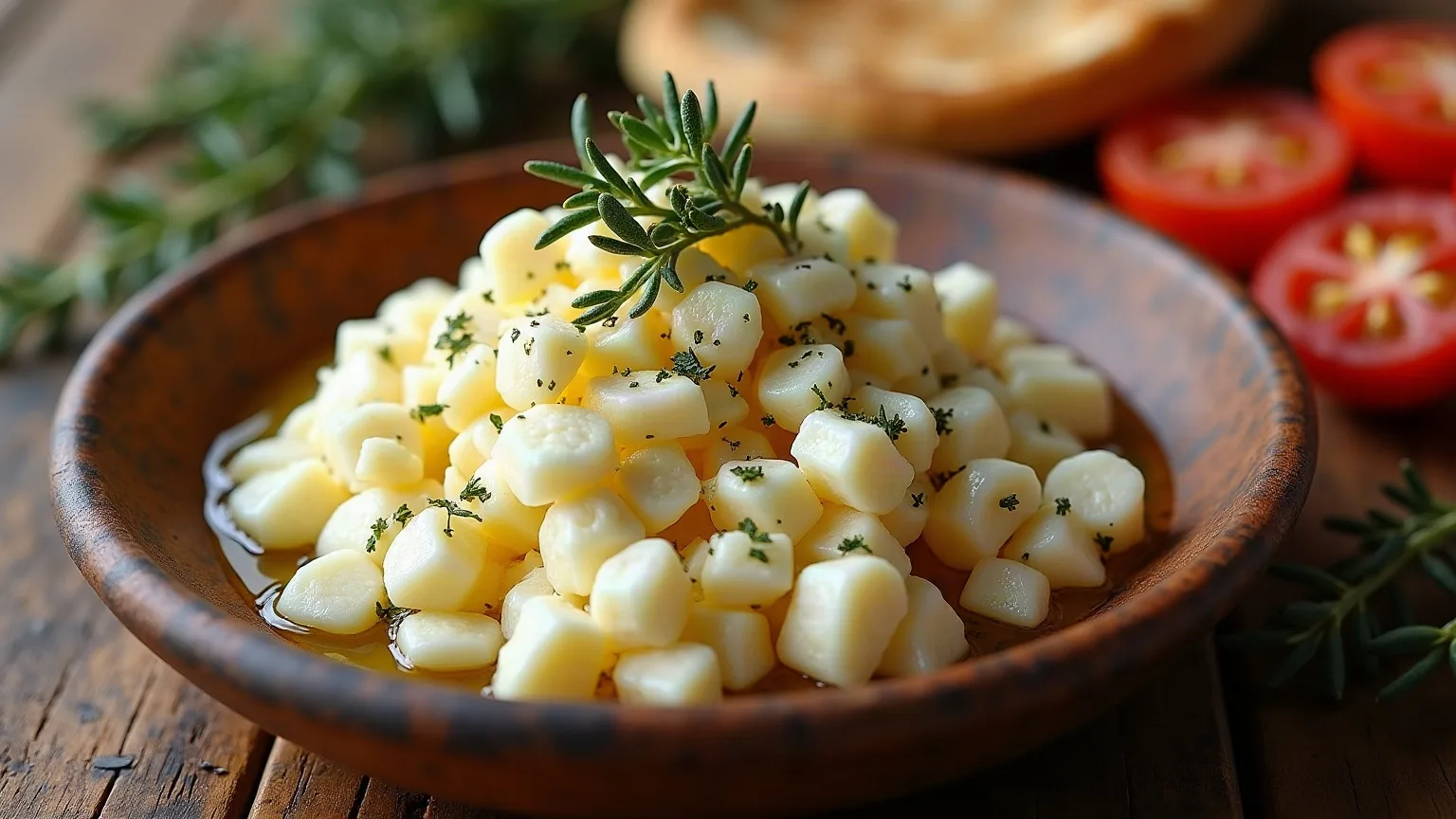
Çökelek
The curd that precipitates when de-fatted ayran or churn buttermilk is heated. In some regions it is made from whey instead, so çökelek is a product class defined by its acid-and-heat coagulation rather than by one starting material.
Acid and heat push casein past its isoelectric point and out of colloidal suspension — the very reaction that ruins a yoghurt soup, here the entire point. The result is low in fat and high in casein: roughly 15–20 g protein per 100 g fresh, and up to 54 g dried.
What it is made of
 Yoghurt
pH 4.4 · splits above 85 °C
Dairy: it brings creaminess, protein and calcium.
Temper it with a few spoons of the hot liquid before it goes in; added straight, it splits.
Sa2
Yoghurt
pH 4.4 · splits above 85 °C
Dairy: it brings creaminess, protein and calcium.
Temper it with a few spoons of the hot liquid before it goes in; added straight, it splits.
Sa2
 Salt
0.8–1.5% of the weight of the food
Seasoning: it sets the perception and balances the salt.
0.8–1.5% of the weight of the food. Coarse and fine salt do not weigh the same by the spoon, so weigh it.
Salt
0.8–1.5% of the weight of the food
Seasoning: it sets the perception and balances the salt.
0.8–1.5% of the weight of the food. Coarse and fine salt do not weigh the same by the spoon, so weigh it.
What it tastes like
The axes that define this dish: sour 42, salty 38 — the ones sitting clearly above the average.
This profile is computed rather than measured: the role-weighted average of its ingredients’ taste vectors, shifted by what the cooking does. The thin line is the database average on that axis.
How it is made
-
Heat de-fatted buttermilk or milk to 80 °C without boiling it.
-
Add the acid, stir once or twice and leave it alone for ten minutes.
Why At pH 4.6 the casein loses its charge and falls; stirring more only breaks the curd up. -
Strain through muslin and rinse once with cold water.
-
Salt it and let it drain for another half hour.
Where it comes from
Regional names include hamçökelek in Silifke, keş in Anamur, minci on the eastern Black Sea, sürk in Hatay and ekşimik in Thrace.