
Kefir
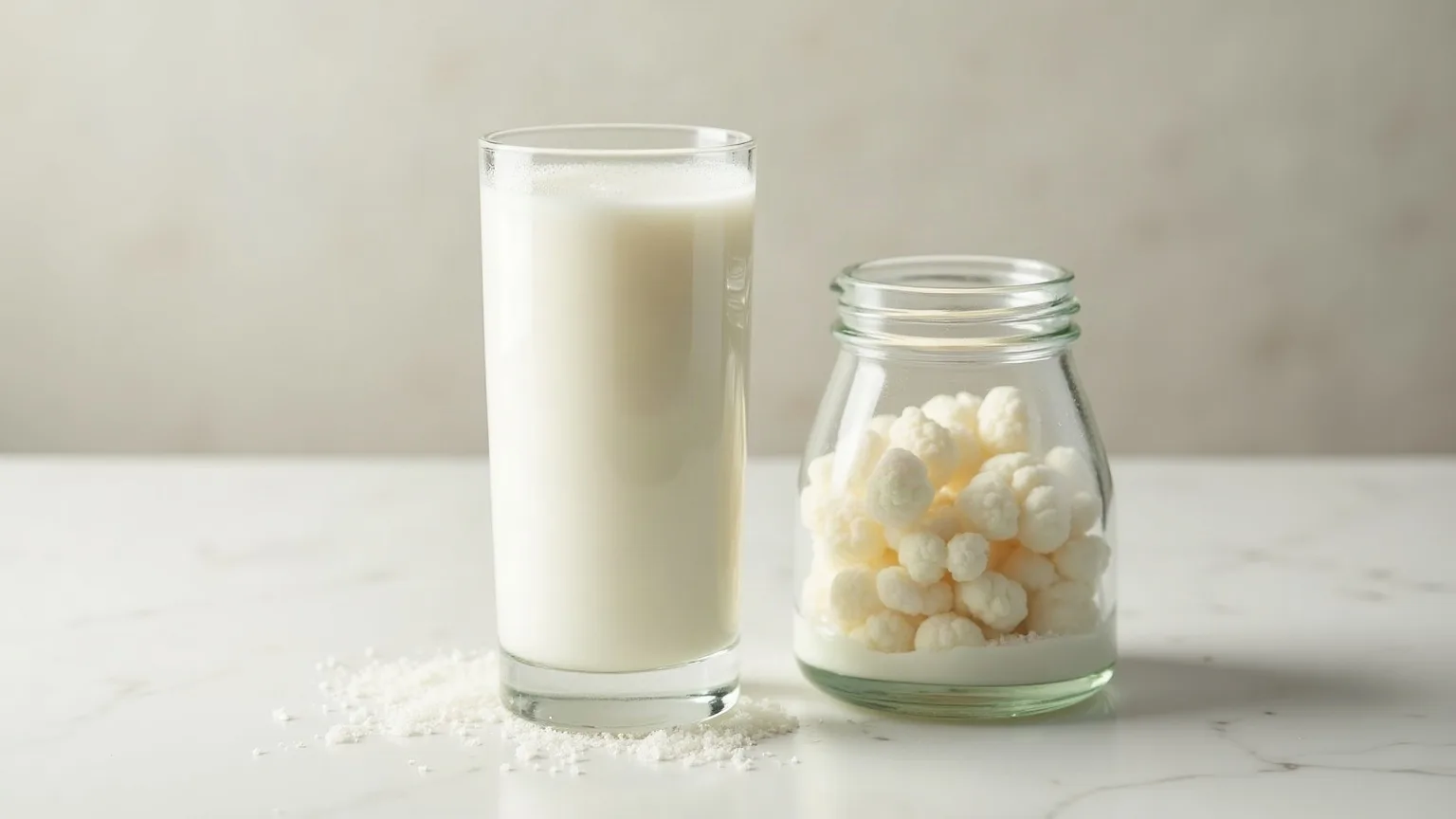
A tangy, slightly effervescent fermented milk drink made with kefir grains — cauliflower-like living granules of bacteria and yeasts in a polysaccharide matrix, recovered and reused.
The core difference from yoghurt is that the fermentation is double: alcohol as well as lactic acid. Composition runs about 88–89% water, 0.8–0.9% lactic acid and 0.6–1.1% alcohol. Yoghurt works with two defined thermophilic bacteria; kefir carries an undefined consortium.
What it tastes like
The axes that define this dish: sour 30, umami 37 — the ones sitting clearly above the average.
This profile is computed rather than measured: the role-weighted average of its ingredients’ taste vectors, shifted by what the cooking does. The thin line is the database average on that axis.
How it is made
-
Put the kefir grains in a glass jar and pour room-temperature milk over them.
-
Cover with cloth rather than sealing it.
Why There are yeasts in the culture, and the carbon dioxide they make builds pressure in a sealed jar. -
Leave it at 20–25 °C for 18 to 24 hours.
-
When it thickens, strain it through a plastic sieve and return the grains to fresh milk.
Where it comes from
Its homeland is the Karachay region of the North Caucasus. It entered the scientific literature in 1867 through Dr Dgogin’s presentation to the Caucasian Medical Society.